FAMReports Features
Wildlife veterinary medicine is a highly specialized and essential field that merges the principles of animal health with the critical work of environmental conservation. This discipline allows veterinary professionals to not only treat individual animals but also to contribute meaningfully to the protection of entire ecosystems and biodiversity.
In the context of conservation, veterinary science extends far beyond the clinical treatment of injuries and diseases. It plays a pivotal role in preserving endangered species, maintaining ecological balance, and ensuring the survival of wildlife populations through disease prevention, habitat health monitoring, and emergency medical intervention.
As a wildlife veterinarian working with the Uganda Conservation Foundation (UCF), I have the privilege and responsibility of participating in interventions that directly contribute to Uganda’s conservation legacy. From rescuing snared elephants to conducting health assessments on giraffes and lions, each day underscores the indispensable link between veterinary work and wildlife survival.
One of my primary areas of operation is Murchison Falls National Park, Uganda’s largest and one of its most ecologically significant protected areas. Here, under the mandate of the Uganda Wildlife Authority (UWA), we collaborate to provide timely medical support to wild animals affected by poaching, human-wildlife conflict, and environmental stress.
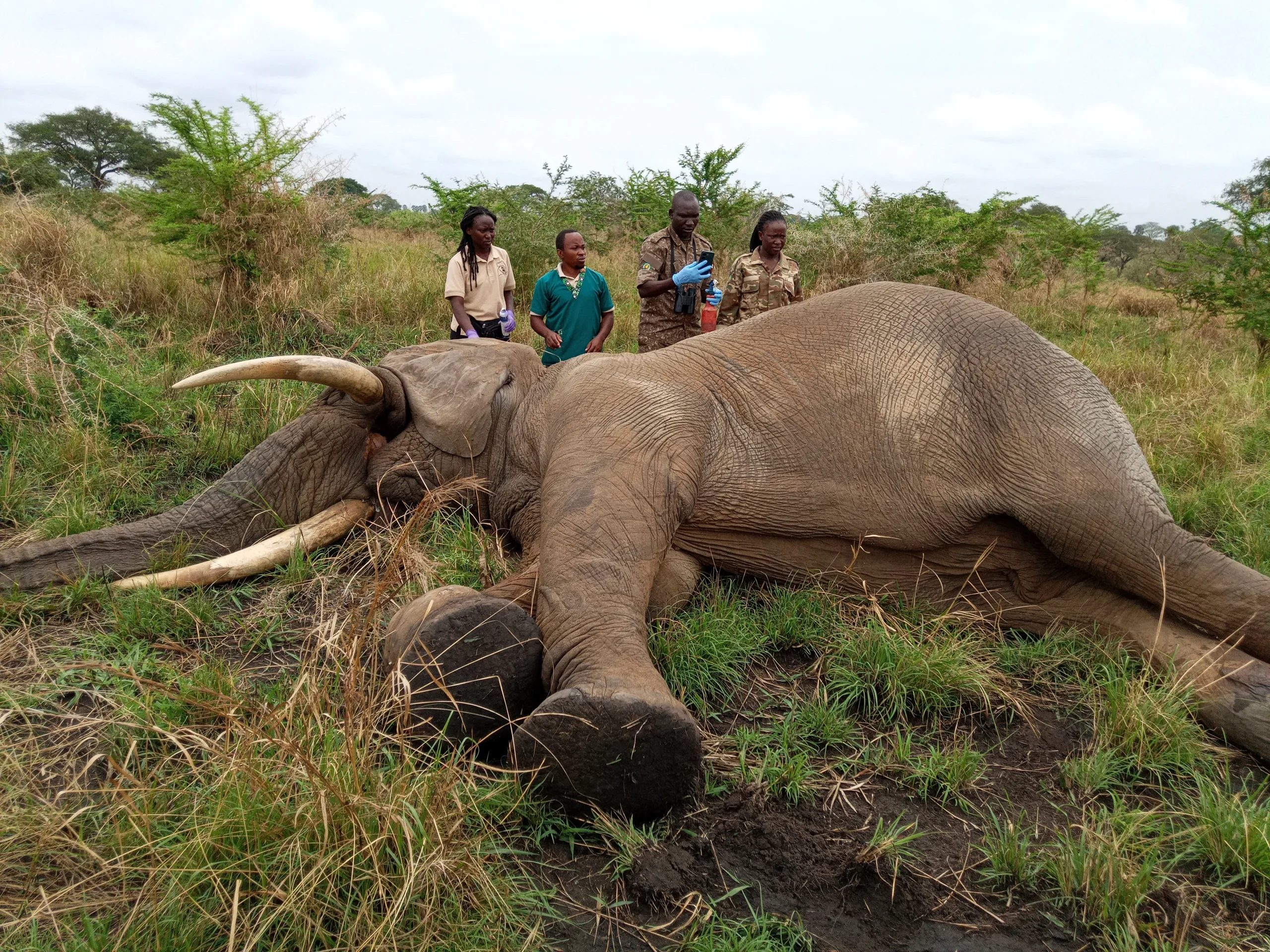
It is important to clarify that Uganda Conservation Foundation does not manage national parks. Instead, we work closely with UWA, which is the official government agency charged with the stewardship of Uganda’s wildlife. Our role is to provide technical, medical, and logistical support that enhances UWA’s capacity in conservation management.
Every time I treat a snared animal or perform surgery on an injured lion, I am reminded that this work goes beyond the immediate recovery of the animal. Each intervention represents a step toward Uganda’s long term conservation goals and supports the country’s broader efforts in sustainable development and biodiversity preservation.
Proactive veterinary interventions are essential to preventing disease outbreaks that could devastate entire populations of wild animals. Through continuous surveillance and health assessments, we can detect the early signs of illness, enabling swift responses that prevent wider ecological damage and protect both animal and human communities.
Diseases like anthrax, rabies, and tick-borne infections can spread rapidly in the wild and, in some cases, to humans and livestock. Identifying and managing these threats early on ensures the safety of Uganda’s wildlife populations and minimizes the risk of zoonotic disease transmission to local communities and tourists.
Beyond its ecological importance, wildlife conservation is intricately tied to Uganda’s socio-economic wellbeing. The tourism sector, which relies heavily on the country’s natural beauty and diverse wildlife, is one of Uganda’s largest sources of foreign exchange and provides employment to thousands of people across the nation.
Before the global outbreak of COVID19, the tourism industry contributed about 7.7 percent to Uganda’s Gross Domestic Product. The majority of tourists came for wildlife-based experiences such as game drives, birdwatching, and gorilla tracking, which collectively placed Uganda on the map as a top safari destination in Africa.
With the gradual recovery of the tourism sector, projections indicate an annual growth of over 6 percent. This resurgence emphasizes the urgent need to safeguard Uganda’s iconic species—elephants, lions, giraffes, and mountain gorillas—whose survival is directly linked to the country’s ability to attract and retain international tourism.
Visitors from around the world travel to Uganda to experience the awe of seeing wild animals roam freely in their natural habitats. These species are not only symbols of Uganda’s rich natural heritage but are also economic assets that must be protected through rigorous conservation and veterinary interventions.
Losing these animals would not only be a blow to Uganda’s biodiversity but would also undermine the livelihoods of communities dependent on tourism, diminish foreign investment in conservation, and weaken national efforts aimed at achieving the Sustainable Development Goals related to environment and economic growth.
Thus, conservation through veterinary medicine is not merely an ecological commitment. It is also an economic strategy that ensures Uganda continues to benefit from its wildlife assets. Protecting animal health helps sustain ecotourism, support rural economies, and promote the country’s global image as a premier conservation destination.
My work has taken me into some of the most challenging and dangerous situations imaginable. Whether immobilizing a buffalo in distress or conducting field surgery on an injured leopard, every operation demands meticulous planning, advanced skills, and the courage to act swiftly in high-risk environments.

Each intervention is a race against time and circumstance. Wildlife veterinarians often work under pressure, dealing with unpredictable animal behavior, harsh terrain, and limited resources. Yet, the emotional reward of restoring an animal to health and seeing it return to the wild is unmatched in professional satisfaction.
What drives us in this field is a profound sense of purpose. This work is not for the faint-hearted. It requires resilience, technical excellence, and an unwavering dedication to the cause of conservation. For many of us, this is more than a job—it is a calling.
I often reflect on the powerful words of Martin Luther King Jr., who said, “If a man has not found something worth dying for, he is not fit to live.” For me, and many of my colleagues, the cause of wildlife conservation is that noble pursuit worth every sacrifice.
At Uganda Conservation Foundation, we incorporate veterinary care as a core pillar of our conservation model. Medical support is integrated into anti-poaching strategies, community engagement efforts, and wildlife crime investigations. This comprehensive approach ensures that each animal treated contributes to the long term recovery of its species.
Years of encroachment, poaching, and habitat degradation have left many animal populations vulnerable. Through veterinary support, we provide not only immediate care but also increase the chances of survival for injured and orphaned animals, contributing directly to their reintegration and reproductive success in the wild.
Recently, during the Veterinary Day celebrations in Kiboga District, the national theme “Animal Health Takes a Team” struck a deep chord with me. Indeed, effective conservation requires collaboration among veterinarians, park rangers, researchers, communities, and policymakers working in concert to protect our wildlife.
Behind every successful operation is a diverse team of professionals. From logistics coordinators and data analysts to field veterinarians and community scouts, teamwork is what transforms individual interventions into sustainable conservation impact across Uganda’s protected areas.
The role of the wildlife veterinarian often goes unnoticed by the public, yet it is critical. We are the silent guardians behind the health of animals that form the backbone of Uganda’s ecosystem, cultural identity, and tourism industry. Our work ensures that these treasures endure for future generations.
Recommended: Akon City Dreams Stall: Seven Years, Still No Concrete Progress
UCF strengthens this effort by providing Uganda Wildlife Authority with veterinary kits, specialized gear, field equipment, and logistical support. Our partnership enhances the ability of wildlife authorities to respond quickly to emergencies and deliver sustained medical care in some of Uganda’s most remote regions.
Wildlife conservation is a multifaceted endeavor that requires coordination across government agencies, non-profit organizations, academic institutions, and local communities. Veterinary medicine plays a foundational role in this ecosystem, ensuring that health interventions support broader conservation and socio-economic objectives.
Veterinary science in conservation is not merely about treating wounds. It is about sustaining ecosystems, preventing disease transmission, and enabling the recovery of species that are vital to ecological balance and human wellbeing. When wildlife thrives, the benefits ripple across communities, nations, and the global environment.
As we mark World Veterinary Day, we are reminded that safeguarding animal health is a shared responsibility. Uganda’s future in conservation depends on our ability to work together, to train more professionals, and to invest in the tools and systems that make lasting impact possible.
About the Author
Dr. Crispus Singoma is a Senior Wildlife Veterinarian at Uganda Conservation Foundation, stationed in Murchison Falls National Park. He is a conservation and wildlife forensics expert committed to preserving Uganda’s natural heritage through veterinary medicine and collaborative environmental stewardship.