FAMReports News Desk | April 2026
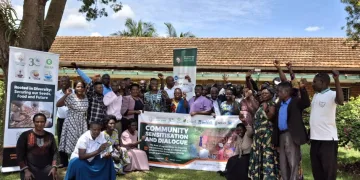
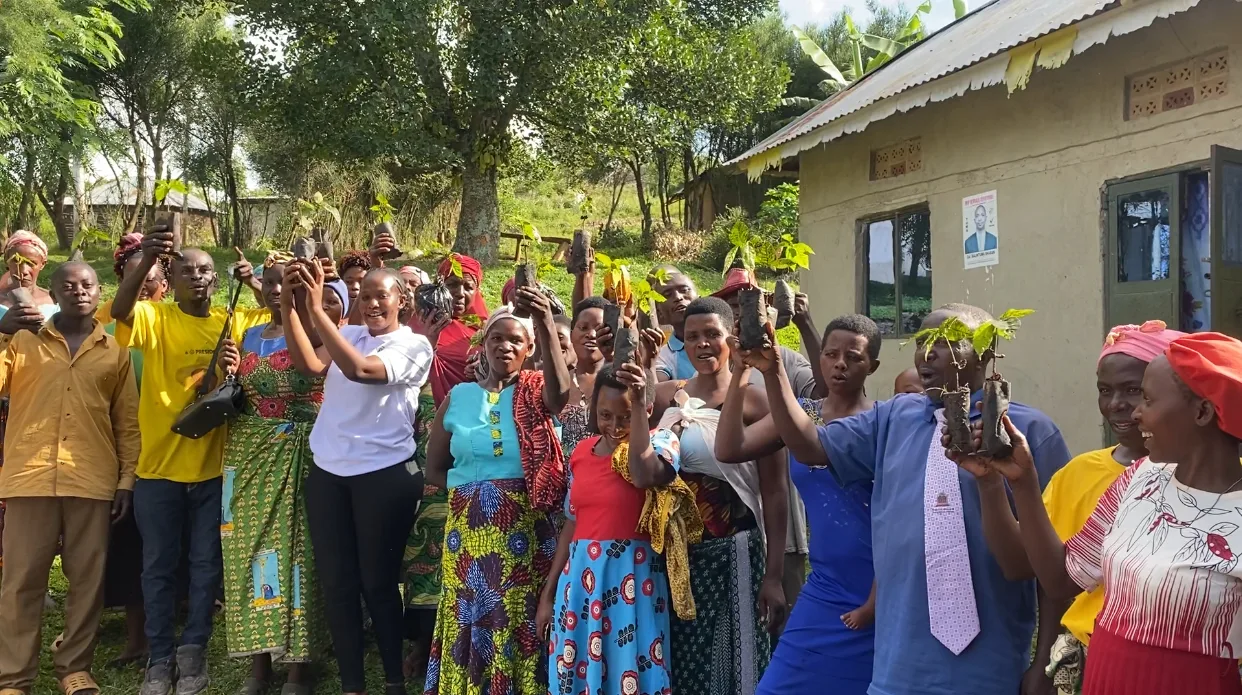
EcoSkills Initiative has intensified its community outreach efforts in Kyegegwa District, distributing cocoa seedlings and equipping farmers with climate smart agricultural skills aimed at improving household incomes and strengthening resilience to environmental challenges.
The intervention, conducted in Kiguya Village, targeted over 60 farmers, providing them with cocoa seedlings as part of a broader strategy to transition communities from subsistence farming to more sustainable and profitable agricultural practices. The initiative reflects a growing recognition of cocoa as a high value cash crop with the potential to transform rural livelihoods when effectively managed.
Beyond seed distribution, the outreach adopted a holistic capacity building approach, integrating training sessions on financial literacy, family planning, environmental conservation, and small scale farming techniques. This multi dimensional strategy is designed to empower farmers not only as producers but also as informed decision makers capable of managing both agricultural enterprises and household welfare.
Also Read: Netherlands Government NL Scholarship 2026 Opens for International Students
Speaking during the engagement, EcoSkills Initiative Founder Maxiline Kansabe emphasized the need for farmers to rethink their approach to agriculture by prioritizing value and income generation.
“Farmers should begin to think about the value of what they plant. It is not just about farming, but about the output and income it can generate,” she noted.
Kansabe explained that the intervention was informed by socio economic data highlighting Kyegegwa as one of the most economically challenged districts in the Tooro sub region, despite its strong agricultural base. This paradox, she said, underscores the need for targeted interventions that enhance productivity, value addition, and market oriented farming.
She pointed to cocoa farming as a strategic entry point, noting that the crop currently commands between UGX 30,000 and 35,000 per kilogram at maturity, offering a viable pathway for income diversification and poverty reduction among smallholder farmers.
The technical training on small scale farming was facilitated by Sserunkuma Venansio, a crop seedlings expert, who underscored the importance of efficiency and innovation in land use.
“You don’t need a large piece of land to farm successfully. With proper planning and use of available materials, even small scale farming can be profitable,” he explained.
Participants were encouraged to adopt resource efficient practices, including vertical gardening and the use of recycled materials such as plastic bottles for planting. These approaches not only maximize limited land space but also contribute to environmental conservation by reducing waste.
Environmental sustainability formed a central pillar of the training, with facilitators addressing pressing challenges such as deforestation and poor waste management. Farmers were introduced to alternative practices, including the use of maize residues for cooking fuel, reducing reliance on firewood and mitigating pressure on forest resources.
Project Coordinator Philip Alihika highlighted the critical role of planning in both farming and household management. He emphasized that inclusive decision making within families is essential for improving overall welfare and ensuring sustainable development outcomes.
Recommended: Informal Workers to Benefit as NSSF Launches Nationwide Livelihood Drive
“Everything begins with proper planning. Decision making within families should also be inclusive to improve overall welfare,” he advised.
The initiative received strong support from local leadership, with Kiguya Village Chairperson Rukanga Asiimwe commending the organisation for its timely intervention.
“We thank EcoSkills Initiative for supporting our farmers. We request more trainings like this to help uplift our community,” he said.
In addition to agricultural support, EcoSkills Initiative extended humanitarian assistance to vulnerable households by distributing clothes to community members, particularly targeting single mothers and disadvantaged families. The gesture was aimed at restoring dignity and providing immediate relief to those in need.
Kansabe expressed appreciation to partners and well wishers who contributed to the outreach, noting that their support was instrumental in achieving the initiative’s impact at the grassroots level.
She concluded by urging farmers to translate the knowledge gained into practice, stressing that sustainable transformation depends on consistent application of skills and collective responsibility.
“Real change begins when knowledge is put into action. What we practice today will shape the future of our families, our community, and our environment,” she said.
Trusted Stories. Informed Voices. Impactful Reporting.
Website: www.famreports.com
Email: info@famreports.com
Social handle: @FAMMediaGroup