As climate change and conventional agricultural practices continue to threaten global food security, Uganda’s young learners are finding a unique way to make their voices heard—through poetry.
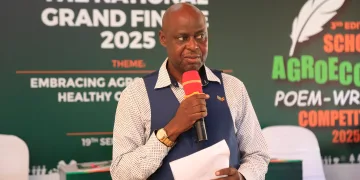
On September 19, 2025, Eastern and Southern Africa Small-Scale Farmers’ Forum (ESAFF Uganda), together with its partners, will host the National Finals of the 3rd Schools’ Agroecology Poem Writing Competition at Namugongo Kyoto, Les Foyers de Charité, Kampala.
Now in its third year, the competition has evolved far beyond a simple literary exercise. It has become a platform where students translate their reflections on climate justice, environmental conservation, and food security into evocative verses that resonate across classrooms, communities, and policy discussions.
This year’s theme, “Embracing Agroecology for Healthy Communities,” will be highlighted by Dr. Grace Baguma, Executive Director of the National Curriculum Development Centre (NCDC). The contest challenges learners to examine and question existing food production, distribution, and consumption systems, encouraging a generation that can critically confront the impacts of chemical-dependent farming, land degradation, and exploitative trade.
ALSO READ: How Pride Bank’s New Product Strengthens SACCOs and Investment Clubs in Uganda
The path to the national finals is a rigorous one. Competitors first demonstrate their talents at school-level contests, advance through district and regional competitions, and refine their submissions at each stage. This process allows learners to deepen their understanding, broaden their perspectives, and hone their creative expression as they interact with peers from diverse backgrounds.
By the time the finalists take the stage in September, they will represent not just their schools, but the aspirations of Uganda’s youth. Their poems will embody a collective hope: that the next generation of leaders will be environmentally conscious, socially responsible, and committed to safeguarding the country’s food systems.
Dr. Baguma emphasized that the competition serves as a valuable avenue to inspire young people to develop a genuine interest in agriculture, particularly agroecology. “This initiative encourages learners to engage with organic agriculture,” she explained. “Many students often lack interest in farming, especially when they associate it with punishment or chores, but this program reframes agriculture as an exciting and meaningful endeavor.”
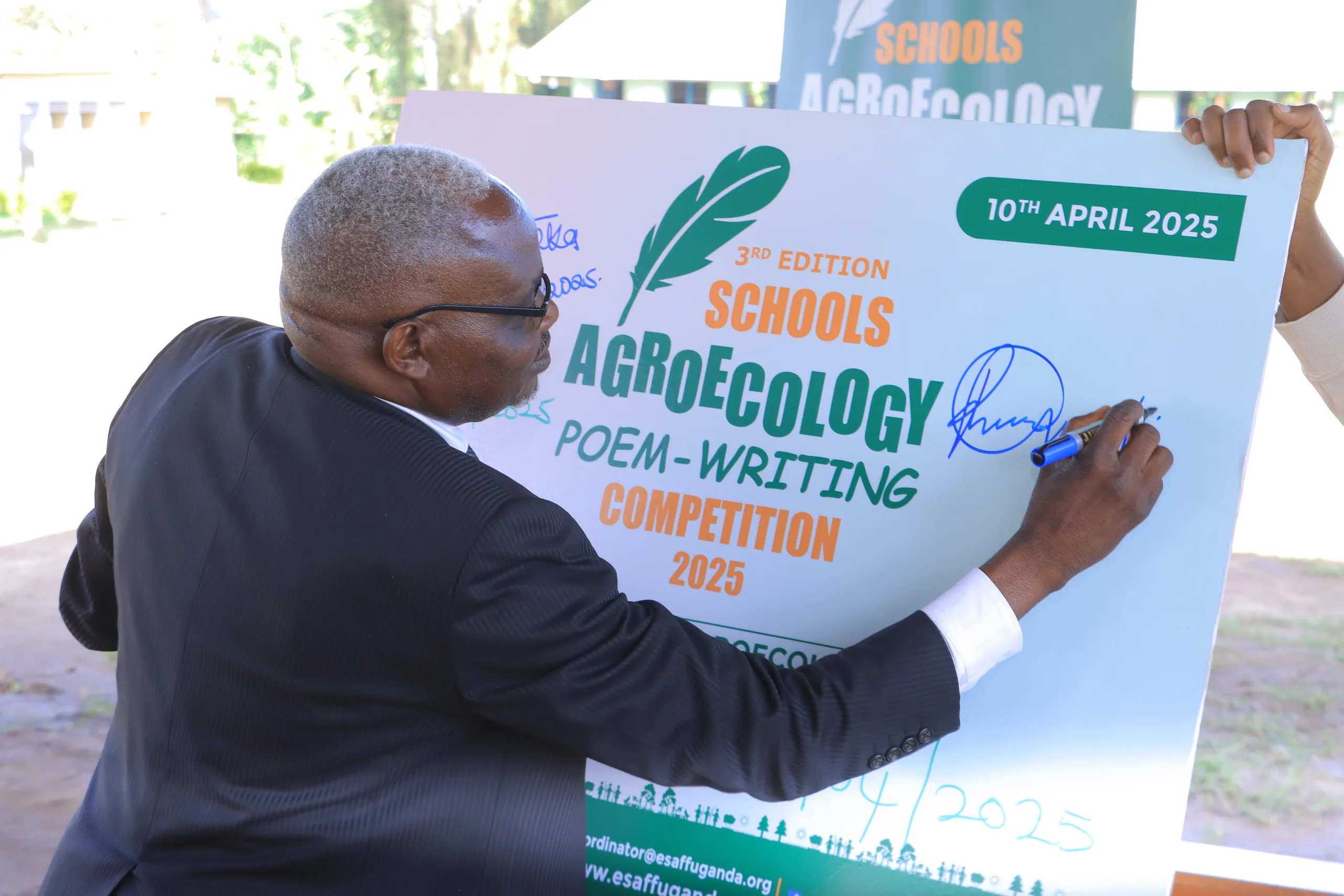
Since 2023, ESAFF Uganda has ensured that learners become active contributors to national conversations on agroecology, rather than passive recipients of knowledge. Nancy Mugimba, National Coordinator for ESAFF Uganda, underlines that young people have immense potential to influence the future.
“As we face rising non-communicable diseases linked to conventional farming, soil depletion, and climate impacts, learners emerge as voices of change,” Mugimba noted. “Their poems can inspire communities, influence policymakers, and highlight the urgency of adopting agroecology for healthier, more resilient societies.”
Similarly, Achilles Byaruhanga, Executive Director of Nature Uganda and Prince William Award recipient, stressed that engaging young people in sustainable food system initiatives should have started years ago, given the vulnerability of Uganda’s current agricultural practices. He added that providing students with platforms to articulate their understanding of agroecology empowers them to become active change-makers, capable of inspiring communities, shaping policy, and advancing resilient food systems.
Adrine Atwiine, MEAL Officer at ESAFF Uganda, further highlighted that the competition goes beyond theoretical knowledge, allowing learners to apply agroecological practices in practical ways. Past participants have initiated school agroecology projects, including organic pesticide production, poultry farming, and garden cultivation. In their communities, learners, together with their families, have planted trees, recycled plastic containers, and integrated sustainable practices into their farms.
Top performers in the competition will be rewarded with prizes that recognize creativity and commitment, reinforcing the idea that investing in the intellectual and ethical growth of youth is investing in the future of Uganda’s food systems.
The Schools’ Agroecology Poem Writing Competition is shaping a generation of thinkers, advocates, and leaders—young people equipped not only with literary skills but also with the awareness and courage to confront climate change and safeguard the environment for generations to come.