By Kajuga Rogers Kabagambe, FAMReports Opinions
Every year on June 3rd, Namugongo becomes a sacred epicenter of devotion, as pilgrims from across the globe gather to honor the Uganda Martyrs, 22 Catholic and 23 Anglican converts executed between 1885 and 1887 for refusing to renounce their newfound Christian faith under the orders of Kabaka Mwanga II.
However, a crucial character in this defining chapter of Uganda’s spiritual history remains conspicuously unrecognized, Mukajanga, the royal chief executioner, whose actions catalyzed martyrdom but whose story embodies the nuanced complexity of power, duty, repentance, and transformation. Without Mukajanga’s actions, the narrative of martyrdom in Uganda as we know it would not exist. His role, while grim, was foundational, and the time has come to engage with it fully, truthfully, and with historical justice.
A Forgotten Yet Foundational Figure
Mukajanga was born in Buyonga Kikandwa, Kakiri Town Council in Wakiso District, central Uganda. By the early 1880s, he had joined Kabaka Mwanga II’s royal guard, quickly rising through the ranks due to his loyalty, discipline, and diligence. In 1884, at the height of religious tensions in Buganda, he was appointed the chief executioner, a position that placed him at the fulcrum of power and persecution.
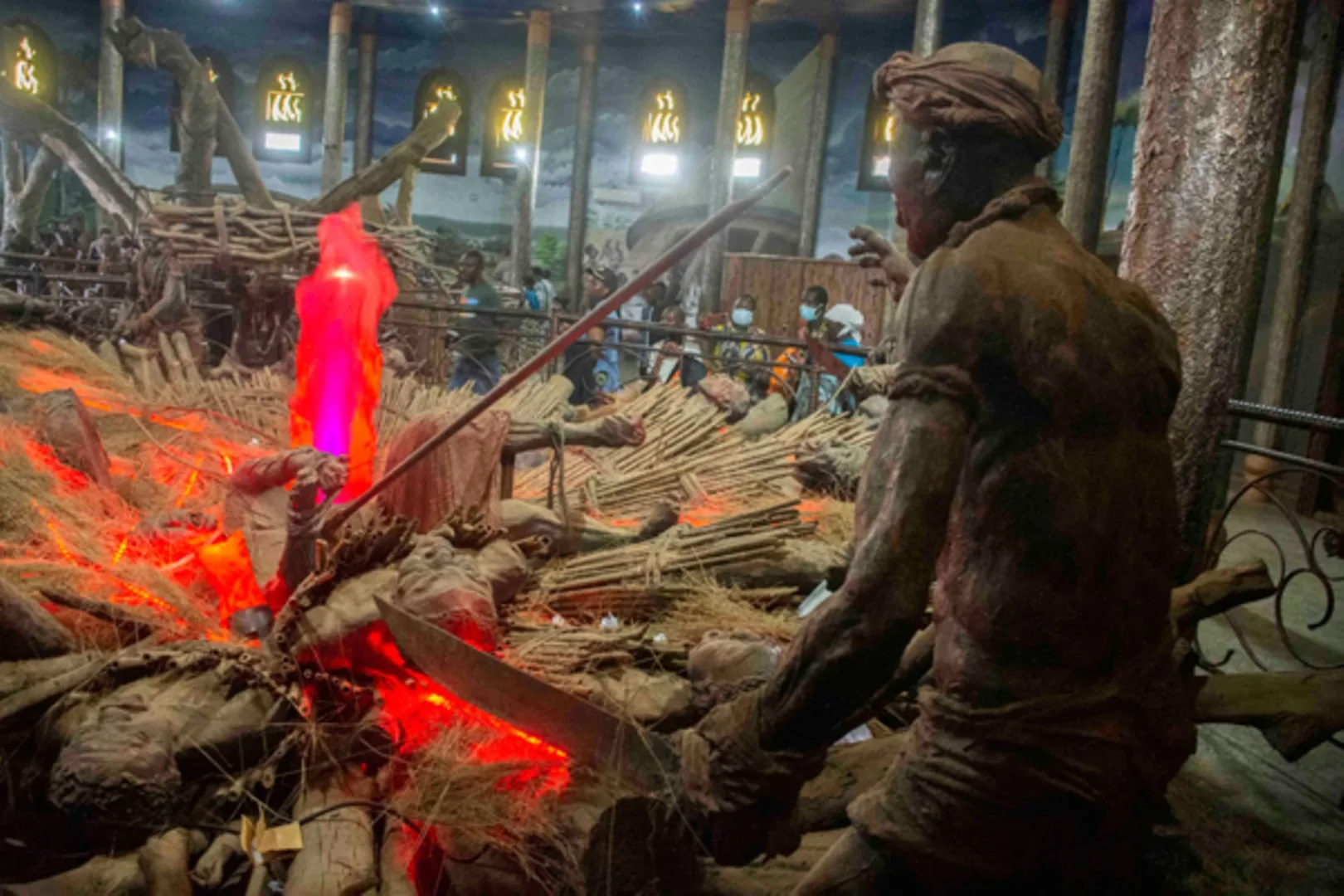
From his station near a water stream at what is now the Anglican Shrine in Namugongo, Mukajanga executed orders directly from the king, most infamously, the burning and beheading of the 45 Christian converts, along with an estimated five Muslims, who were considered disobedient subjects under the monarchy.
Recommended: Bill Gates Commits $200 Billion to Africa, Urges Investment in Health and AI
Yet, history has a way of flattening human beings into archetypes, heroes and villains, leaving little room for complexity. Mukajanga is often remembered simply as a brutal killer. But his story, like Mwanga’s, took an unexpected turn.
Mukajanga’s Spiritual Transformation
Unknown to many, Mukajanga eventually converted to Christianity. According to descendants such as Mr. Fredrick Nsubuga Gaggawala, he was baptized and given the name Paul Kibuuka before his death around 1900. He died 14 years later, though this figure remains controversial and possibly symbolic or misreported. His family insists he had a change of heart, understood the significance of the faith he had once persecuted, and embraced the very beliefs he once opposed.

Namugongo, A Place of Redemption, Not Just Death
Namugongo, originally called Busale, was established in the mid-1700s under Kabaka Kyabagu as Buganda’s official execution ground. The name “Namugongo” comes from “Omugongo,” meaning “human back,” because of how prisoners were dragged on their backs to the site of execution. This gruesome name embodies the pain of the martyrs but also speaks to a broader national trauma.
Mukajanga set up his post near a stream in this very location where he not only cleaned his weapons but later possibly prayed, repented, and sought peace. His office and burial ground today remain largely unrecognized in the official Martyrs Day commemorations. Yet, this site carries emotional and symbolic weight, and its preservation deserves national attention.
The Call for Inclusive Memory
Honoring the martyrs without acknowledging those who made their martyrdom possible and who later sought spiritual reformation tells an incomplete story. Mukajanga was not a rogue villain acting independently. He was a royal servant, carrying out the King’s orders within a cultural and political framework that had yet to encounter the ethical dilemmas posed by foreign religions and shifting values.
Recommended: Foodtech Frontier Challenge 2025: A Global Call for Bold Food Innovation
His descendants have called for balance and fairness, emphasizing that he should not be treated merely as a footnote or a shameful secret. They propose that his ancestral burial grounds in Buyonga Kikandwa, where he was reinterred in 1902, be designated a historical site. They are not asking for glorification but for contextualization, for Uganda to acknowledge its complex spiritual and political evolution in full.
A Precedent for Rewriting Legacy, Mwanga II’s Redemption
If history can begin to reassess Kabaka Mwanga II, a man who not only persecuted but later promoted Christianity, then Mukajanga’s journey can also be reexamined. Mwanga, who ruled between 1884 to 1888 and 1889 to 1897, was baptized in exile as Daniel and even invited back Catholic missionaries and allocated land for major religious sites such as Namirembe Cathedral, Lubaga Cathedral, and Mengo Hospital. His second reign was marked by reconciliation and religious tolerance.
Just as Mwanga’s repentance is beginning to enter public sermons and academic discussions, so too must Mukajanga’s.
The Role of Institutions, Church and State Responsibility
It is time for Mengo, the Buganda Kingdom, and the Church in Uganda to reflect deeply on the complexities of their shared history. Institutions like Makerere University, which recently inaugurated the Sir Edward Muteesa II Museum, can serve as cultural partners in curating exhibitions that do not sanitize or oversimplify but rather confront history with honesty.
By incorporating Mukajanga’s story into Martyrs Day commemorations, Uganda would not be celebrating violence but highlighting transformation, resilience, and the capacity for spiritual growth. This can be a valuable theological and national lesson, especially for youth seeking nuanced examples of forgiveness, courage, and change.
The Martyrs’ Story Is Not Complete Without Mukajanga
The Uganda Martyrs were sanctified by fire and faith. Their legacy is unquestionable and deserves reverence. But the road to their martyrdom was shaped by historical actors like Mukajanga, whose life was marked by duty, sin, and ultimately, repentance. To remember only the victims without engaging with the humanity of their executioner is to leave history half told.
In his own way, Mukajanga, like the martyrs, walked a spiritual path marked by profound transformation. His story is not an antidote to martyrdom but a deeper lens through which we might understand Uganda’s religious awakening. Let us tell it fully, fairly, and with the humility it deserves.
Personal Suggestions
Documentary Project: A collaboration between Buganda Kingdom and Uganda Episcopal Conference to produce a documentary exploring Mukajanga’s transformation.
Heritage Recognition: Official registration and development of Mukajanga’s burial site in Buyonga Kikandwa as a national heritage site.
Historical Symposium: Organize an annual symposium on lesser known historical actors in Uganda’s religious history.
Curriculum Review: Include balanced narratives in Uganda’s religious education syllabi.
Interfaith Dialogue Series: Use Mukajanga’s story as a case study in public forums on forgiveness and redemption.