FAMReports People & Profiles
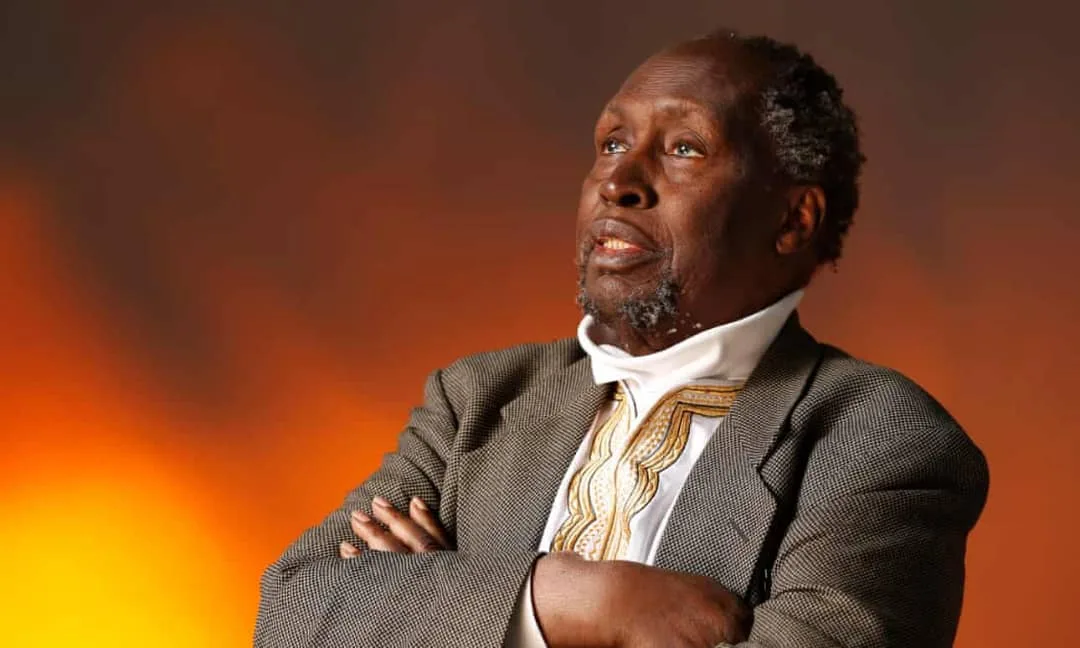
It was a quiet Wednesday morning in Atlanta when the literary world lost one of its most fearless voices. Ngũgĩ wa Thiong’o, the Kenyan author whose words defied colonial power, authoritarian regimes, and linguistic oppression, passed away at the age of 87. The announcement came from his daughter, Wanjiku wa Ngũgĩ, through a moving tribute: “He lived a full life, fought a good fight.”
For decades, Ngũgĩ was more than just a writer—he was a symbol of resistance, a pioneer of post-colonial African literature, and an unrelenting advocate for indigenous languages. Through fiction, essays, plays, and scholarly work, he gave voice to Kenya’s pain, its struggle for liberation, and the dignity of African identity. To many, he was the literary conscience of the continent.
Born in Struggle, Raised by Stories
Born in 1938 in colonial Kenya, Ngũgĩ’s early years were defined by conflict and contradiction. One of 28 children born to a father with four wives, he grew up in a Gikuyu-speaking household in Limuru. The son of a peasant farmer, Ngũgĩ experienced firsthand the brutality of British colonial rule during the Mau Mau uprising. The uprising deeply scarred his family—his father was driven off their land, and two of his brothers were killed. These traumas would later become the pulse of his fiction.
When Kenya gained independence in 1963, Ngũgĩ was already on a path of artistic defiance. He published Weep Not, Child in 1964—the first novel in English by an East African author. In it, the story of Njoroge, a boy whose hopes are dashed by colonial violence, mirrors Ngũgĩ’s own awakening to the power and peril of dreams in a broken land. “The River Between” was his first novel that described a cultural clash in an African community setting that he wrote during his student days at Makerere University in Kampala, Uganda.
Challenging Empires with a Pen
As Ngũgĩ’s literary reputation grew, so did his resolve to shift the cultural axis from Europe to Africa. While lecturing at the University of Nairobi, he famously demanded that the English Department be renamed and restructured. “Why can’t African literature be at the centre so we can view other cultures in relation to it?” he wrote in a groundbreaking paper. His intellectual courage ignited a generation of African scholars and writers.
Prison, Exile, and the Language of Freedom
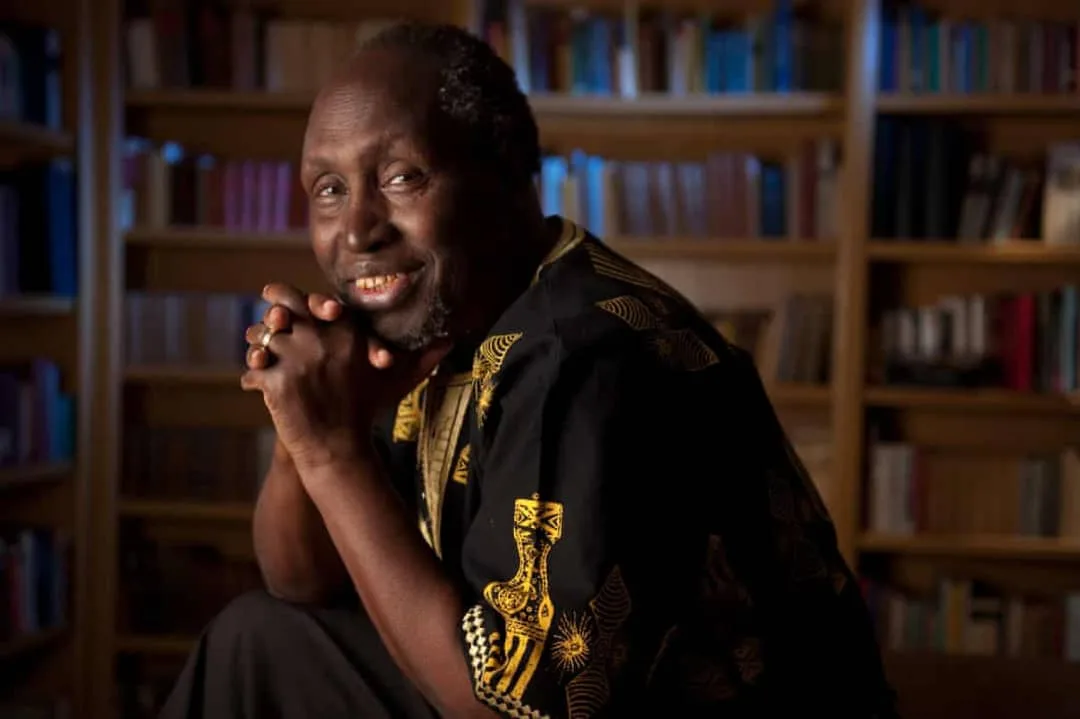
Behind bars, Ngũgĩ began to reimagine his mission. “Why was I detained only after I wrote in Gikuyu?” he asked. The realization sparked a radical transformation. From that moment, Ngũgĩ abandoned English and chose to write exclusively in Gikuyu—asserting that true liberation required reclaiming African languages from colonial erasure.
After his release in 1978, life in Kenya became increasingly dangerous. In 1982, he discovered a government plot to assassinate him. Forced into exile, Ngũgĩ fled to Britain, and later to the United States, where he joined the University of California, Irvine, and became director of its International Center for Writing and Translation.
Despite exile, Ngũgĩ remained prolific. His 1980 novel Devil on the Cross, written on toilet paper in prison, became a landmark in African literature. In 1986, Matigari, another Gikuyu-language novel, was so politically provocative that the Kenyan authorities issued a warrant for the arrest of its fictional protagonist.
Triumph and Tragedy in Return
In 2004, two years after Moi left power, Ngũgĩ returned to Kenya with his wife, Njeeri. The homecoming was emotional, greeted by enthusiastic crowds. But their visit turned tragic. Armed men stormed their Nairobi apartment, assaulted Ngũgĩ, and raped Njeeri.
The horrifying attack underscored the continued danger for those who challenged systems of power. “I don’t think we were meant to come out alive,” Ngũgĩ told The Guardian in 2006.
Yet, Ngũgĩ was undeterred. In 2006, he released Wizard of the Crow, an epic satire set in a fictional African dictatorship. Rich with allegory, the novel tackled the corruption of post-colonial leaders and the lingering shadow of imperialism. The most beautiful sentence in the book, Ngũgĩ said, was one he translated from Gikuyu—a reminder that beauty and power reside in our native tongues.
Recognition and Legacy
Although he never won the Nobel Prize—losing out to Mario Vargas Llosa in 2010—Ngũgĩ remained a perennial favorite. In 2021, he became the first nominee for the International Booker Prize writing in an indigenous African language, recognized for his novel-in-verse The Perfect Nine. His commitment to translating his own works affirmed his belief in the universality and richness of African languages.
Recommended: Uganda Scales Up Coffee Registration Before EU Deadline
Throughout his life, Ngũgĩ battled prostate cancer, survived triple heart bypass surgery, and endured political persecution. But his greatest victory was cultural—he redefined what it meant to be an African writer. He proved that African stories told in African languages could transcend borders and inspire the world.
Ngũgĩ wa Thiong’o fathered nine children, four of whom—Tee, Mukoma, Nducu, and Wanjiku—are acclaimed writers. His legacy lives in their words, and in the dreams of every young African who dares to write their truth.
Resistance Is the Best Way of Keeping Alive
Ngũgĩ’s philosophy was simple yet profound: “Resistance is the best way of keeping alive. It can take even the smallest form of saying no to injustice. If you really think you’re right, you stick to your beliefs, and they help you to survive.”
Now, as Africa and the world mourns, his legacy remains immortal—in every story told in Gikuyu, Swahili, Luganda, Yoruba, or Zulu. Ngũgĩ wa Thiong’o didn’t just write novels. He wrote Africa back to itself.