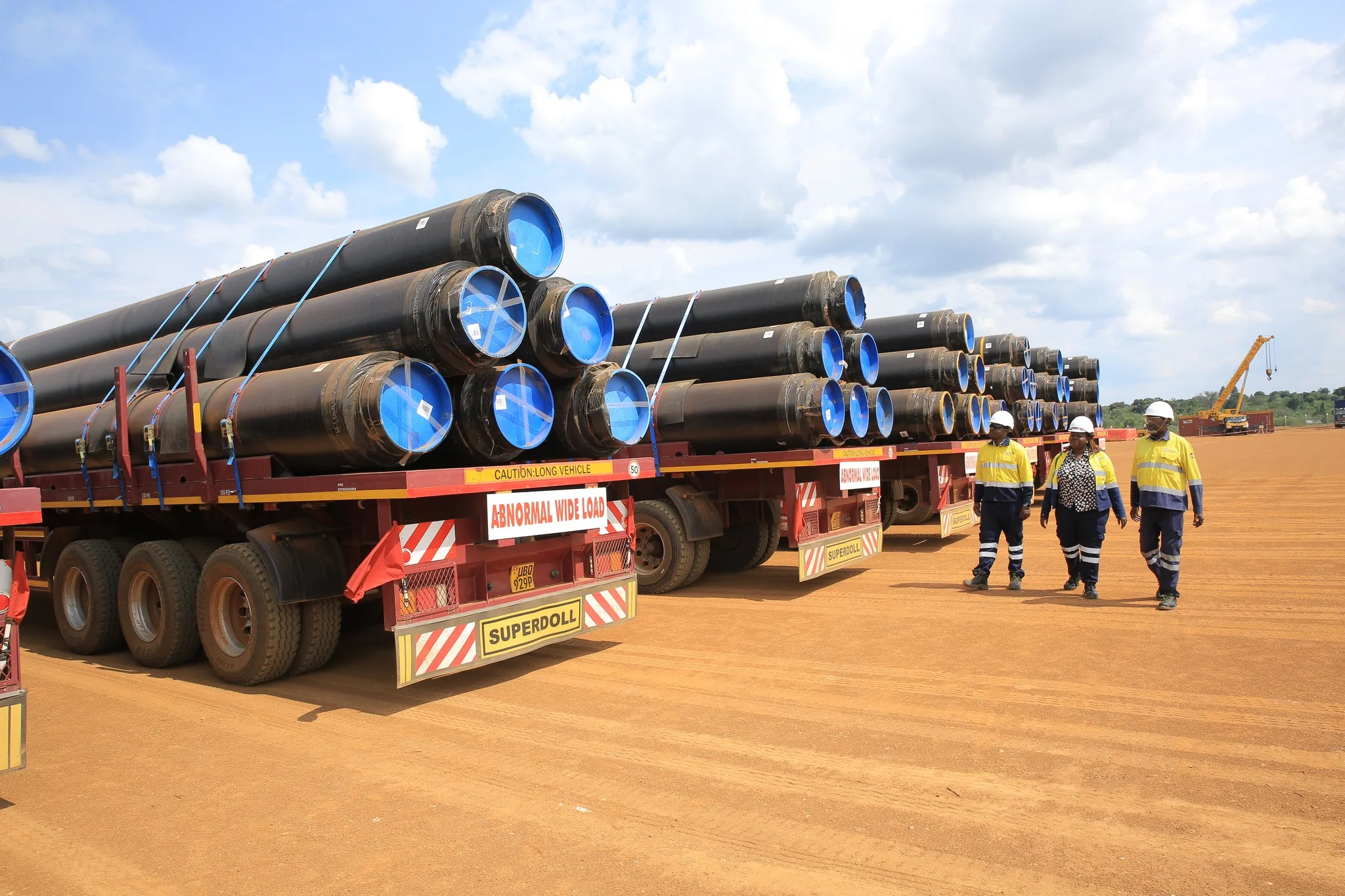
The East African Crude Oil Pipeline (EACOP) has taken a major leap forward with the successful closure of its first tranche of external financing. This milestone marks a significant step in advancing one of East Africa’s most ambitious infrastructure projects.
EACOP Ltd., the company spearheading the construction and future operation of the pipeline, has secured funding from a syndicate of financial institutions, including prominent regional banks. Among them are the African Export-Import Bank (Afreximbank), The Standard Bank of South Africa Limited, Stanbic Bank Uganda Limited, KCB Bank Uganda, and The Islamic Corporation for the Development of the Private Sector (ICD). This financial backing not only reinforces confidence in the project but also underscores its potential to transform the region’s energy landscape.
EACOP is jointly owned by key stakeholders in the energy sector. TotalEnergies holds a majority stake of 62%, while Uganda National Oil Company Limited (UNOC) and Tanzania Petroleum Development Corporation (TPDC) each hold 15%. The remaining 8% is controlled by China National Offshore Oil Corporation (CNOOC). The successful closure of this financing round signals robust investor confidence in the project’s viability and long-term impact.
The secured funding paves the way for continued construction and operational advancements, reinforcing EACOP’s commitment to regional development. As the pipeline inches toward completion, the project continues to emphasize three core pillars: safety, environmental sustainability, and community engagement.
Progress and Economic Impact
The construction of the EACOP pipeline is well underway in both Uganda and Tanzania, surpassing the 50% completion mark by the end of 2024. More than 8,000 Ugandan and Tanzanian workers have been employed, with approximately 400,000 man-hours dedicated to training programs. Additionally, over $500 million has already been injected into local economies through the procurement of goods and services, amplifying the project’s socio-economic benefits.
Beyond job creation, the pipeline is expected to serve as a catalyst for regional growth, enhancing trade, infrastructure, and investment opportunities. By prioritizing local engagement and skill development, EACOP aims to leave a lasting positive impact on host communities.
A World-Class Crude Oil Export System
EACOP is designed as a state-of-the-art crude oil export infrastructure, set to transport Uganda’s oil from Kabaale in Hoima District to the Chongoleani Peninsula near Tanga, Tanzania. With a capacity to transport up to 246,000 barrels of crude oil per day, the pipeline spans an impressive 1,443 km—296 km in Uganda and 1,147 km in Tanzania.
This sophisticated transport system consists of a 24-inch insulated and buried pipeline, six pumping stations, two pressure reduction stations, and a marine export terminal in Tanzania. The project also integrates renewable energy solutions, including a 3 MWp solar plant, and relies on hydro-based national grids for its power supply.
Commitment to Sustainability and Global Standards
EACOP is being developed in adherence to the highest environmental and social responsibility standards. The project aligns with guidelines from the International Finance Corporation (IFC) and the Equator Principles, ensuring responsible implementation that minimizes environmental impact while maximizing economic benefits.
By incorporating best practices in environmental conservation, EACOP seeks to balance industrial growth with sustainability, setting a precedent for future infrastructure projects in Africa.
Also Read: Uganda and UAE Strengthen Ties Through Oil Deals
With financing in place and construction well underway, the East African Crude Oil Pipeline is set to redefine the region’s role in the global energy sector. By unlocking Uganda’s oil potential and streamlining export capabilities, the project is expected to generate significant revenue, drive foreign investment, and boost regional economies.
As EACOP moves forward, its commitment to fostering local employment, engaging communities, and upholding sustainability standards remains steadfast. The successful financial closure marks the beginning of a transformative era for East Africa’s energy sector—one that promises economic prosperity and regional development for years to come.