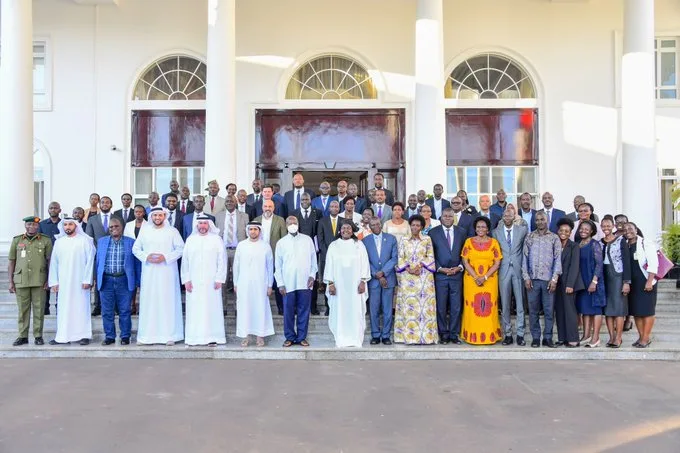
Uganda has taken a major step towards industrial transformation with the signing of an oil deal implementation agreement for the construction of a crude oil refinery in Hoima District. This project, which has been in the pipeline for years, is expected to revolutionize the country’s petroleum sector and boost its economic prospects.
The agreement, signed by Energy Minister Ruth Nankabirwa on behalf of the Ugandan government, formalizes a strategic partnership with Alpha MBM Investments LLC, a United Arab Emirates (UAE)-based company. The deal will facilitate the development of a 60,000-barrels-per-day refinery, positioning Uganda as a key player in the regional oil industry.
President Yoweri Museveni, who witnessed the signing, hailed the involvement of UAE investors, particularly Sheikh Mohammed Bin Maktoum, a member of the Emirati royal family. Museveni emphasized that the refinery is not just about fuel production but also about Uganda taking control of its resources by adding value instead of exporting crude oil.
“We must stop exporting raw materials and instead add value to everything we produce. This refinery is a crucial step in that direction,” Museveni stated.
Uganda’s refinery project has been a long-standing ambition, dating back to the discovery of commercial oil reserves in 2006. The initial plan involved a consortium led by the US-based Albertine Graben Refinery Consortium (AGRC), but delays in financing and investment decisions led to a shift in approach. The new deal with Alpha MBM Investments LLC marks renewed momentum in fulfilling Uganda’s vision of refining its own oil and reducing reliance on imported petroleum products.
According to Minister Nankabirwa, the refinery will produce essential petroleum products such as petrol, diesel, and kerosene, ensuring energy security and price stability in Uganda. Currently, the country depends on fuel imports through Kenya’s Mombasa port, making fuel prices vulnerable to global market fluctuations.
“This project is transformative for our economy, our people, and our future,” Nankabirwa remarked, highlighting the potential of the refinery to generate employment and attract further investment in Uganda’s downstream oil sector.
Beyond oil, the signing of this deal also saw Uganda securing five additional agreements with UAE investors in various sectors, including aviation, logistics, digital land management, cargo storage, and a government digital payment system. These agreements signify a deepening economic relationship between Uganda and the UAE, positioning the Gulf nation as a key partner in Uganda’s development agenda.
Also Read: EAC Moves to Enhance Digital Integration with Cross-Border Payment Masterplan
With the refinery deal now moving toward implementation, the focus will shift to securing financing and setting construction timelines. Once completed, the facility is expected to transform Uganda’s energy landscape, reduce dependence on foreign refined fuel, and contribute significantly to the country’s industrialization efforts.
As Uganda continues to strengthen ties with the UAE, the oil refinery project stands as a testament to the country’s commitment to economic self-reliance and sustainable development. The journey ahead may still present challenges, but with the right partnerships and investments, Uganda is well on its way to becoming a key energy hub in the region.