FAMReports News Desk | April 2026
The Kampala Geopolitics Conference has provided a critical platform for examining the evolving nature of development assistance, with experts calling for a shift toward locally driven solutions and stronger domestic financing mechanisms across African economies.
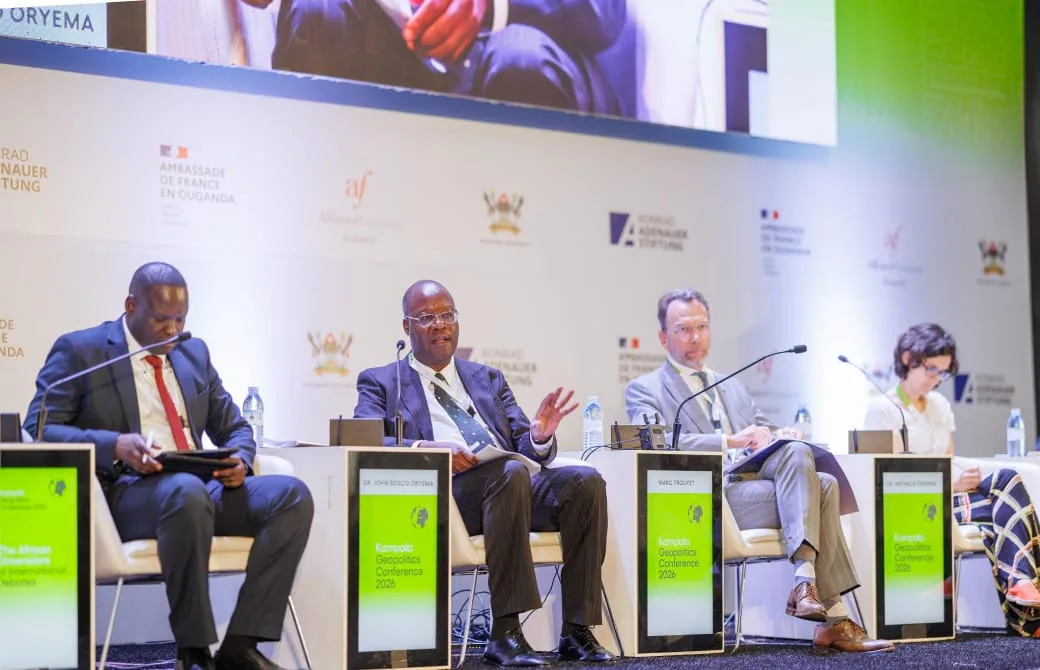
Organized by the Konrad Adenauer Stiftung in partnership with the Embassy of France in Uganda and Alliance Française de Kampala, the conference brought together policymakers, academics, and development practitioners to interrogate Africa’s position in an increasingly complex global order.
Rethinking Development Assistance
Panel discussions centered on the transformation of development assistance from traditional donor driven aid to collaborative partnerships grounded in shared responsibility. Experts emphasized that Africa must reduce reliance on external funding by strengthening domestic resource mobilization and investing in innovative financing models.
Also Read: URA Honors Officer for Exposing $10.2 Million Concealment
Dr. Asumani Guloba highlighted the growing fiscal pressures facing African economies, noting that debt servicing is consuming a significant portion of national budgets.
“Africa’s financial landscape is shifting in a difficult direction, with declining inflows and rising outflows as countries commit more resources to debt repayment. In Uganda’s case, a significant share of the budget is now directed towards servicing debt, raising important questions about fiscal space and development priorities,” he said.
External Pressures and Economic Vulnerability
Participants also examined the impact of global geopolitical actors including China, Russia, Gulf states, Saudi Arabia, Qatar, and the United States on Africa’s economic trajectory. These relationships, while offering opportunities, were described as contributing to vulnerabilities due to shifting interests and conditional engagements.
Recommended: Why Women Founders Still Fight for Credibility in Business
The conference underscored that overdependence on external partners can expose African economies to instability, particularly in times of global uncertainty.
From Aid to Partnership
Mark Trouyet, Country Director of the French Development Agency, emphasized the need to redefine development cooperation frameworks.
“Development assistance is evolving from traditional aid to a new era of collaboration built on shared goals and mutual accountability. The conversation is no longer about support but about true partnership and rethinking the language that shapes global development,” he said.
Local Ownership in Conflict Resolution
On matters of regional stability, Professor Phillip Kasaija Apuuli stressed the importance of local ownership in peacebuilding processes, citing ongoing challenges in the Democratic Republic of Congo.
“Agreements whose processes are not locally owned do not yield commitment. That is why we see stagnation and failure of lasting peace in the DRC. We must involve people on the ground to draft sustainable solutions,” he noted.
A Platform for Dialogue and Engagement
The Kampala Geopolitics Conference is a two day annual academic forum that convenes experts from politics, academia, media, and civil society. With participation exceeding 500 attendees annually through both physical attendance and digital platforms, the conference continues to grow as a hub for critical discourse on international, regional, and local geopolitical issues.
Its core objective is to provide a space for politically engaged citizens to exchange ideas, build networks, and contribute African perspectives to global debates. By bridging academia and practice, the conference fosters inclusive dialogue that reflects diverse viewpoints from Africa and Europe.
The Way Forward
As global development paradigms continue to evolve, the conference concluded with a strong call for African nations to assert greater agency in shaping their development paths. Emphasis was placed on innovation, policy coherence, and strategic partnerships that align with Africa’s long term priorities.
The discussions in Kampala signal a broader shift in thinking where Africa is not merely a recipient of aid, but an active participant in redefining the frameworks of global development cooperation.
Trusted Stories. Informed Voices. Impactful Reporting.
Website: www.famreports.com
Email: info@famreports.com
Social handle: @FAMMediaGroup