FAMReports News Desk | August 6, 2025
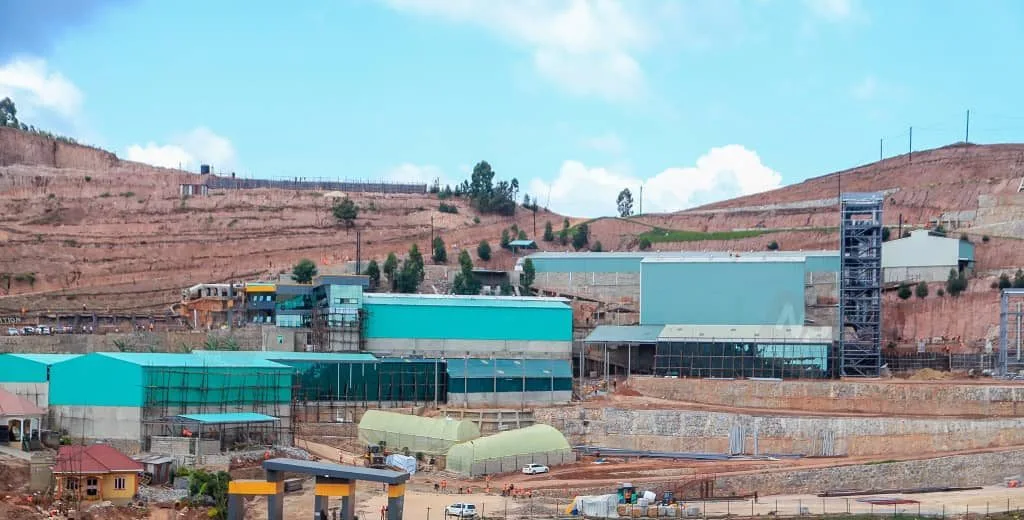
In the picturesque hills of Rwashameire, Ntungamo District, a powerful vision is steadily rising—a transformative venture set to redefine Uganda’s role in the global coffee market. The Africa Coffee Park, led by celebrated entrepreneur Nelson Tugume, is not just a factory—it is a national mission with continental ambition.
From July 24 to 26, a team of local and international journalists toured the project site, witnessing first-hand what Tugume described as Africa’s first integrated coffee industrial and tourism city.
“This goes beyond coffee. We’re building an innovation-driven city equipped with a private international airport, a convention centre, an ICT hub, hotels, and world-class leisure zones,” Tugume shared passionately.
Set across hundreds of acres, the Africa Coffee Park is structured to produce high-value coffee-based products such as instant coffee, drip packs, malt coffee, energy drinks, and even coffee-infused cosmetics. Tugume’s model boldly challenges the traditional export of raw coffee beans, proposing instead to export premium finished products that can command up to USD 40 per kilogram, compared to the typical USD 2.50 for raw beans.
“In 20 years, not a single coffee bean should leave Uganda unprocessed,” Tugume asserted. “We’re flipping the narrative. Uganda will no longer just be a raw material exporter—we’re entering the premium market.”
Empowering Farmers and Building Inclusive Growth
One of the project’s most groundbreaking components is its commitment to Uganda’s smallholder coffee farmers. Tugume has already started buying coffee at UGX 12,000 per kilo, well above the current average of UGX 9,000, and has introduced an AI-powered traceability system to monitor crop quality and link farmers directly to the value chain.
“This Park belongs to the farmers,” Tugume emphasized. “It’s about restoring dignity, improving incomes, and giving real value to Uganda’s rural coffee-growing families.”
Government involvement accounts for just 30% of the investment, and Tugume clarified that UGX 12 billion has already been invested in compensating families for resettlement. “Let me be clear—this is not a political project,” Tugume said. “The government is a partner, not the owner. The perception that I received direct funds from the President is entirely false.”
Resilience, Vision, and Global Influence
Tugume’s global outlook stems from his extensive experience in business education and trade missions across Europe, Asia, and the Americas. These insights have shaped a project that prioritizes innovation, inclusion, and international standards.
“I’ve travelled the world not just to learn, but to find serious partners—people who believe in Africa and are willing to build with us,” he said. “Collaboration is everything. Nothing great is built alone.”
To Uganda’s youth, Tugume delivered a resounding message of empowerment: “The world does not reward passivity. Be resilient. Be bold. Be innovative. This is your time to build.”
Scrutiny and National Dialogue
While widely praised, the Africa Coffee Park has also invited scrutiny. During their oversight visit, Leader of the Opposition Joel Ssenyonyi and Members of Parliament raised concerns about transparency and the absence of a formal Memorandum of Understanding between the government and the Inspire Africa Group, Tugume’s company.
Also Read: CHAN or AFCON? Here’s What Sets the Two African Football Tournaments Apart
Nevertheless, Ssenyonyi acknowledged the project’s impact and scalability, noting its potential to inspire similar ventures in Bugisu, Rwenzori, and Masaka—regions that are rich in coffee but lack infrastructure for value addition.
A Parliamentary Committee on Science, Technology, and Innovation also visited the site earlier in March, commending the Park’s role in local job creation and farmer integration, while also calling for clearer public documentation. Currently, the Africa Coffee Park employs over 600 Ugandans, with plans for massive scale-up.
Uganda’s Coffee Potential: A Global Force in the Making
Uganda continues to earn its place among global coffee heavyweights. Ranked 6th worldwide in total coffee production and 1st in Africa for Robusta, the country exported 8.2 million 60-kg bags in 2024. The ambitious target is 20 million bags by 2030.
Coffee contributes over 22.6% of Uganda’s export earnings and supports 12.5 million livelihoods. As global demand soars—especially for single-origin and ready-to-drink (RTD) products—Uganda’s capacity to supply high-quality, value-added offerings has never been more relevant.
Recommended: Kampala City Festival Returns as Symbol of Urban Renewal and Civic Pride
“This project couldn’t come at a better time,” said Brendah Akankunda, National Coordinator at the International Trade Centre. “It’s a major opportunity for Uganda to own more value along the coffee chain and increase its global competitiveness.”
A Legacy in the Making
Despite challenges and public debate, Tugume remains focused on the bigger picture.
“Uganda often celebrates foreign investors while doubting its own. But we’re here to stay. We are building something Uganda—and Africa—has never seen before,” he said.
The Africa Coffee Park is more than an industrial complex—it is a symbol of Uganda’s rising confidence, capacity, and commitment to driving homegrown, transformative solutions. It tells a bold story: Uganda can process, package, and profit from its own resources. And it will.
Trusted Stories. Informed Voices. Impactful Reporting.
🌐 www.famreports.com | 📩 info@famreports.com | @FAMMediaGroup