FAMReports News Desk | April 2026
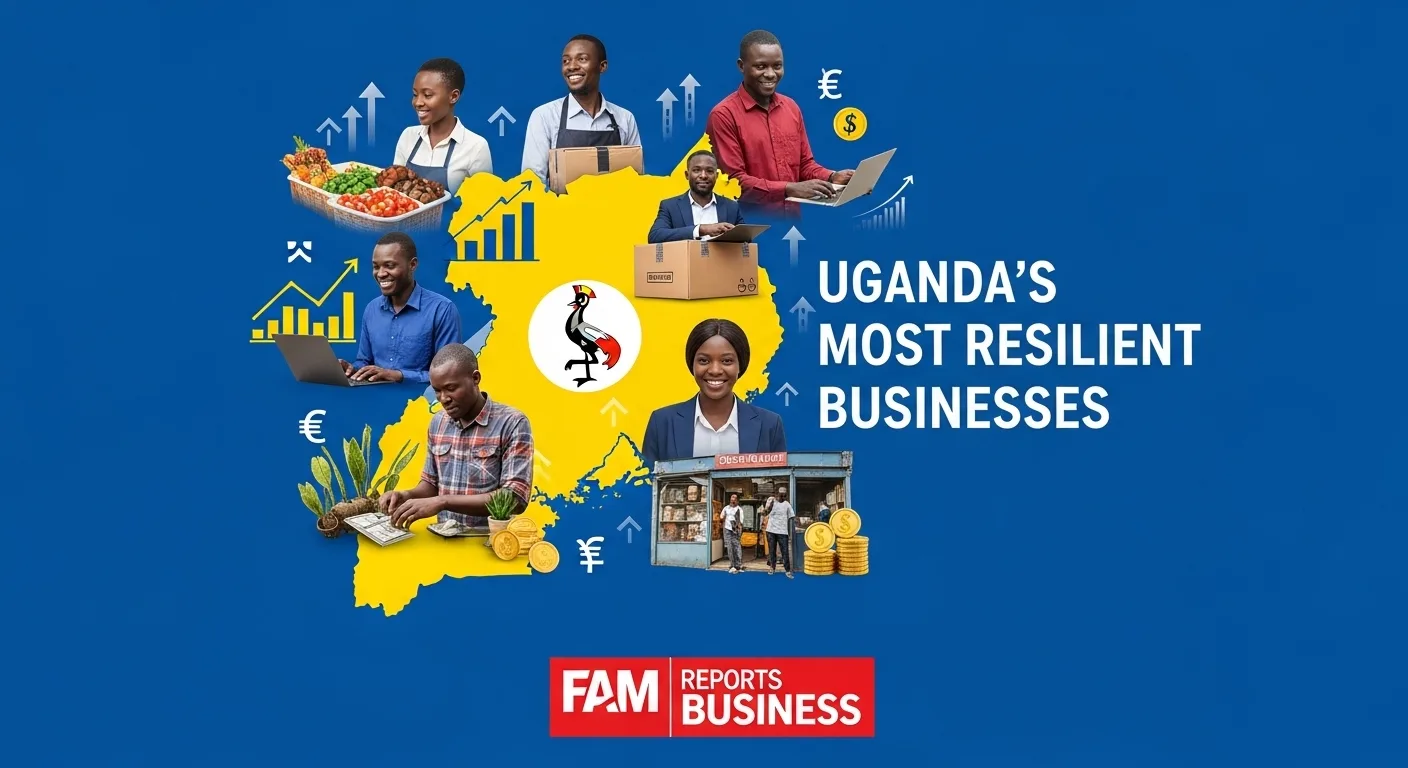
Uganda’s economy continues to show areas of steady demand and structural support that favour certain small and medium sized enterprises. Below we profile ten business types that present higher chances of survival for entrepreneurs in 2026 and explain the practical reasons behind each choice.
1. Small Scale Agro Processing
Why it survives: Agriculture remains the backbone of Uganda’s economy and value addition increases margins. Processing cereals, fruits, oils or cassava into packaged goods reduces dependence on volatile raw commodity prices and opens access to urban retail and institutional buyers. The agriculture sector accounted for roughly a quarter of GDP in recent estimates, underscoring domestic demand.
2. Poultry Farming and Egg Production
Why it survives: Poultry offers relatively fast turnover and steady consumer demand for meat and eggs. Urbanisation and growing middle class consumption patterns keep demand consistent year round and during holidays. Small flocks for egg production require modest capital and can scale with local feed and market linkages. Industry reports indicate continued growth in poultry output in coming years.
3. Retail Fast Moving Consumer Goods Shops
Why it survives: Everyday needs such as food staples personal care and household items ensure constant cash flow for well located retail shops. When coupled with credit arrangements and good supplier relationships these outlets weather economic cycles better than discretionary services.
Also Read: Why the World Still Underestimates Africa and the Cost to Global Supply Chains
4. Mobile Money and Agent Banking
Why it survives: Mobile financial services remain central to financial life in Uganda. Large subscriber bases and wide usage for payments transfers and bill settlement make agency services and complementary fintech cab services a durable business model. As mobile money ecosystems expand there are more value added services to provide to customers.
5. Solar Energy Installation and Maintenance
Why it survives: Limited national grid access creates sustained demand for solar home systems solar powered appliances and business grade installations. Entrepreneurs offering installation financing and reliable after sales maintenance carve a defensible niche. Market studies point to major untapped potential for solar products across rural and peri urban areas.
6. Food Processing and Baking
Why it survives: Urban consumers want convenient ready to eat and packaged food. Bakeries small scale snack manufacturers and chilled food suppliers that prioritise quality packaging and distribution to retail outlets or events enjoy predictable repeat business. Food businesses that manage costs and hygiene standards build trust quickly.
7. Motorcycle Repair Parts and Service Shops
Why it survives: Motorcycle transport remains a primary mode of movement in many towns and cities. Demand for repair parts servicing and simple spare parts retail is steady and localized. Low overhead and rapid turnover make this a resilient micro business for entrepreneurs with mechanical skills.
8. Digital Services Agencies
Why it survives: Businesses increasingly need digital marketing web development bookkeeping and IT support to reach customers and operate efficiently. Small agencies offering measurable results at affordable rates can build long term retainers with local businesses and NGOs. The digital shift is ongoing creating recurring demand.
Recommended: Uganda Seeks to Close Trade Gap with Egypt Through Strategic Partnerships
9. Waste Management and Recycling Micro Enterprises
Why it survives: Municipalities businesses and consumers need practical solutions for waste collection recycling and value recovery. Ventures that convert plastic glass and organic waste into reusable products or compost find both commercial and donor or municipal contracting opportunities. Environmental services are increasingly seen as essential rather than optional.
10. Savings and Loan Groups and Community Finance Intermediaries
Why it survives: Formal banking access is still limited for many entrepreneurs. Community based savings and lending schemes and small scale microfinance operations that focus on trust based customer relationships often outperform in early survival metrics. Formalisation and digital linkages improve durability but even basic group finance remains a lifeline for many small businesses.
What Increases Survival Odds Across These Sectors
Entrepreneurs who survive do a few things well. They keep costs tight and cash flow visible. They build reliable supply and offtake relationships. They invest in basic record keeping and customer service. They adapt product mixes to local tastes and are intentional about formal registration and tax compliance when required. Research on Ugandan SMEs notes that many fail within early years but those that adopt planning and financial discipline stand a far better chance of persisting.
Final Note for Founders
Pick a sector that matches your skills, test with a minimum viable offering, and focus relentlessly on reach and repeat customers. In the current Ugandan context, businesses that supply everyday needs add value locally and can scale with disciplined financial management and good market linkages.
Trusted Stories. Informed Voices. Impactful Reporting.
Website: www.famreports.com
Email: info@famreports.com
Social handle: @FAMMediaGroup