FAMReports News Desk
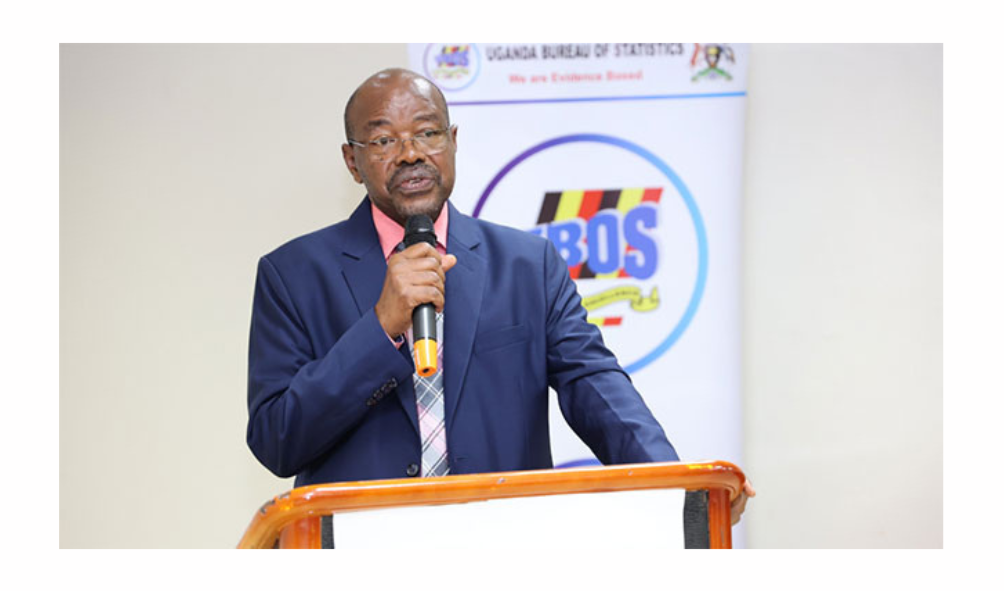
The Uganda Bureau of Statistics (UBOS) on Thursday released the findings of the Uganda National Household Survey (UNHS) 2023/24, painting a mixed picture of progress and persistent inequality. The report, unveiled at Hotel Africana in Kampala, was officiated by Amos Lugoloobi, Minister of State for Finance, Planning and Economic Development (Planning), and Dr. Chris N. Mukiza, UBOS Executive Director and Chief Statistician.
At the heart of the findings is a significant milestone: Uganda’s national poverty rate has fallen to 16.1 percent, down from 20.3 percent recorded in 2019/20. This represents an estimated 7 million Ugandans living below the international poverty line of US$1 per day, the lowest poverty rate recorded in decades.
Government leaders, including Lugoloobi, hailed the achievement as proof that flagship interventions like the Parish Development Model (PDM) and Emyooga are beginning to transform rural livelihoods. “This decline is a clear signal that our anti-poverty programs are yielding results,” Lugoloobi said.
However, beneath the national average lies a sobering reality of regional inequality. While urban poverty rates stand at 10.3 percent, rural Uganda remains disproportionately affected, with 19.4 percent of the population living in poverty.
Nowhere is this disparity more severe than in Karamoja, where an alarming 74.2 percent—or approximately 937,500 people—live in poverty, nearly five times the national average. The region has witnessed a worrying increase in poverty, up from 65 percent in the previous survey. Other high-poverty regions include Bukedi (29.9 percent or 718,400 people) and Teso (29.8 percent or 709,100 people). In stark contrast, Kampala registered the country’s lowest poverty rate at just 1.1 percent, representing only 19,200 people.
“These statistics remind us that our work is far from over,” said Lugoloobi. “We must implement tailored regional strategies if we are to realize Vision 2040 and transform Uganda from a peasant to a modern and prosperous society.”

Education Gains and Gaps
The UNHS also reviewed the state of education, revealing notable gains in primary school enrollment, but also signaling a troubling drop in secondary education participation. The gross enrollment rate for primary education has increased to 119.5 percent, with rural areas (121.2 percent) slightly outpacing urban areas (116.3 percent). Gender parity at the primary level has nearly been achieved, with boys at 119.9 percent and girls at 119.0 percent.
However, secondary school enrollment declined nationally to 33.6 percent, down from 36.8 percent in the previous survey. This drop is more pronounced in rural areas, where only 26.0 percent of children are enrolled, compared to 46.9 percent in urban areas. Boys’ enrollment stands at 34.1 percent, slightly ahead of girls at 33.2 percent.
UBOS Executive Director Mukiza linked the decline to worsening economic pressures. “Many children are being forced out of school and into the labor market due to household income constraints,” he said.
Experts are urging for increased public investment in secondary education, particularly in under-served areas, to reverse this trend and ensure Uganda’s youth are not left behind.
Healthcare Access Improves, but Costs Remain a Barrier
The survey presents mixed results in healthcare delivery. On the positive side, 82 percent of those who fell ill in 2023/24 sought medical attention—an improvement from earlier years. Among the 12 percent who did not seek care, 46.9 percent cited minor illness, while 15.7 percent cited lack of funds.
Private clinics continue to dominate the healthcare landscape, serving 54 percent of patients, compared to 27 percent served by government health centers and hospitals. Encouragingly, 86 percent of households are now located within five kilometers of a healthcare facility, suggesting improvements in health service accessibility.
Nevertheless, experts stress that the cost of healthcare remains a significant hurdle for the poorest communities. “Access is not just about distance—it’s about affordability,” noted Sarah Ssewanyana, Executive Director of the Economic Policy Research Centre (EPRC).
Labor Market Still Anchored in Agriculture
The UNHS further examined employment trends, revealing that agriculture remains the backbone of Uganda’s labor market, especially in rural areas where it employs 55 percent of the workforce. By contrast, urban employment is more diversified: 47.3 percent work in services, and 12.6 percent are in industry.
Recommended: Majority Fail Makerere Law Pre-entry Exam as Only 25% Secure Pass Mark
Joseph Enyimu, Commissioner for Economic Development, Policy and Research at the Ministry of Finance, warned that while poverty is decreasing, rising food prices in urban areas could erode gains for low-income households. “We must prioritize inclusive economic planning and job creation to protect vulnerable populations from external shocks,” he said.
Enyimu emphasized that high-quality statistics, such as those provided by UBOS, are essential to drive evidence-based policymaking. “The UNHS is a continental benchmark, and it remains instrumental for planning, accountability, and development decision-making,” he said.
A Call for Inclusive Development
The report calls for sustained investment in three critical sectors—education, healthcare, and employment—to consolidate the gains in poverty reduction and ensure equitable development across Uganda.
“While the numbers are encouraging, the reality is that millions are still left behind, particularly in the northern and eastern regions,” Ssewanyana warned. “This report offers a roadmap for policymakers to prioritize and tailor programs where they are needed most.”
With Uganda pushing toward middle-income status, the urgency for action has never been greater. The findings of the UNHS 2023/24 provide a clarion call to policymakers, donors, and civil society to close the gaps and ensure that development reaches every Ugandan.
As Lugoloobi concluded, “Our journey to prosperity will be judged not by how fast we grow, but by how fairly we grow. Every statistic in this report is a human story—and every human matters.”