FAMReports News Desk | April 2026
Uganda is set to host its 11th Annual Oil and Gas Convention as the country enters the final and most decisive phase toward achieving its long anticipated first oil milestone.
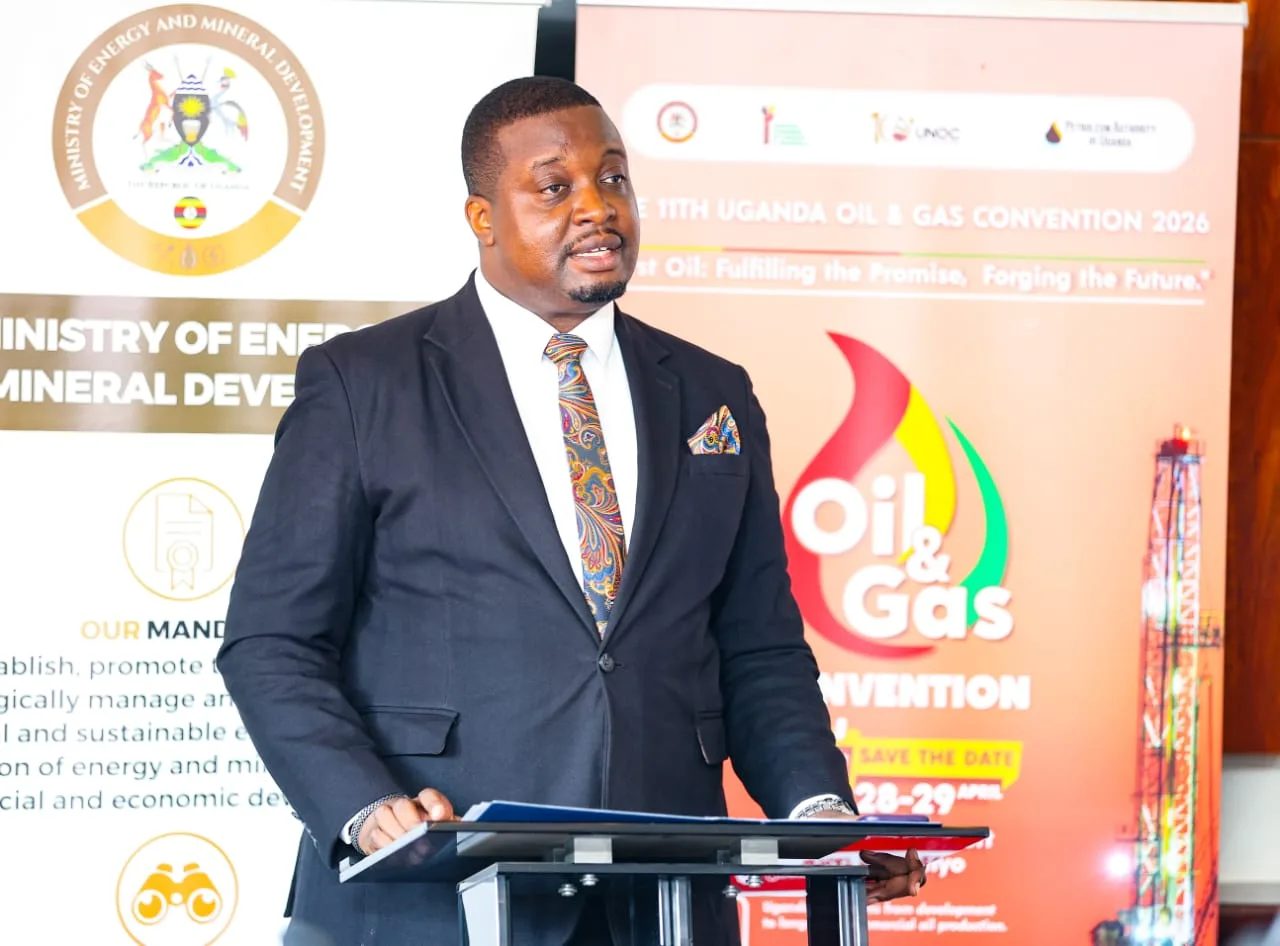
The convention, organized by the Uganda Chamber of Energy and Minerals, will take place from April 28 to 29 at Speke Resort Munyonyo under the theme “First Oil: Fulfilling the Promise and Forging the Future.”
The event is expected to mark the climax of a nationwide engagement process driven by the ongoing 30 Days of Oil and Gas campaign, aimed at fostering public dialogue and stakeholder alignment on Uganda’s petroleum sector.
Sector Enters Final Phase
Speaking during a press conference at Amber House in Kampala, the Chief Executive Officer of the Uganda Chamber of Energy and Minerals, Humphrey Asiimwe, confirmed that Uganda’s oil and gas sector is now firmly in its final phase ahead of production.
Also Read: PAU Focuses on Skills, Local Investment as First Oil Approaches
He noted that key performance indicators across major projects signal readiness, with progress exceeding initial targets.
“All three core projects have surpassed their drilling requirements. Tilenga Project has completed 198 wells against a target of 170, while Kingfisher Project has completed 21 wells against 19 required. The East African Crude Oil Pipeline is now 83 percent complete, with 98 percent compensation achieved along the corridor,” Asiimwe said.
He emphasized that first oil is no longer a projection but a confirmed operational milestone expected in the second half of 2026, with government, operators, and regulators fully aligned to this timeline.
Production Capacity and Reserves
Uganda’s recoverable oil reserves are estimated at approximately 1.65 billion barrels. The Tilenga project alone is designed to reach peak production of 190,000 barrels per day, with full national production capacity projected to rise to about 230,000 barrels per day.
These developments position Uganda as an emerging oil producer in the region, with expectations of significant economic transformation driven by the sector.
Economic Impact and Local Participation
The oil and gas industry has already generated substantial economic benefits during its development phase. Approximately 2 billion dollars in contracts have been awarded to local companies, while an estimated 80,000 direct and indirect jobs have been created.
Recommended: Ministry of Works and Transport Moves to Enforce Mandatory Inspection of Passenger Buses
The Uganda Chamber of Energy and Minerals has played a key role in facilitating over 2.1 billion dollars in local contracts and supporting skills development for more than 7,000 Ugandans.
These efforts reflect a growing emphasis on local content and capacity building as Uganda prepares for full scale production.
Convention to Shape Future Strategy
The upcoming convention will convene government officials, investors, oil operators, and development partners to deepen discussions on Uganda’s readiness for first oil and to align long term strategies for the energy sector.
The forum is also expected to strengthen collaboration and ensure that the transition to production is managed efficiently, sustainably, and inclusively.
Government officials have reiterated their commitment to achieving first oil within the set timeline, citing recent high level ministerial engagements across Uganda and Tanzania as evidence of strong political coordination and operational readiness.
As Uganda approaches this historic milestone, the 11th Oil and Gas Convention is set to provide a critical platform for consolidating progress, addressing remaining challenges, and defining the future trajectory of the country’s energy sector.
Trusted Stories. Informed Voices. Impactful Reporting.
Website: www.famreports.com
Email: info@famreports.com
Social: @FAMMediaGroup