FAMReports News Desk | May 2026
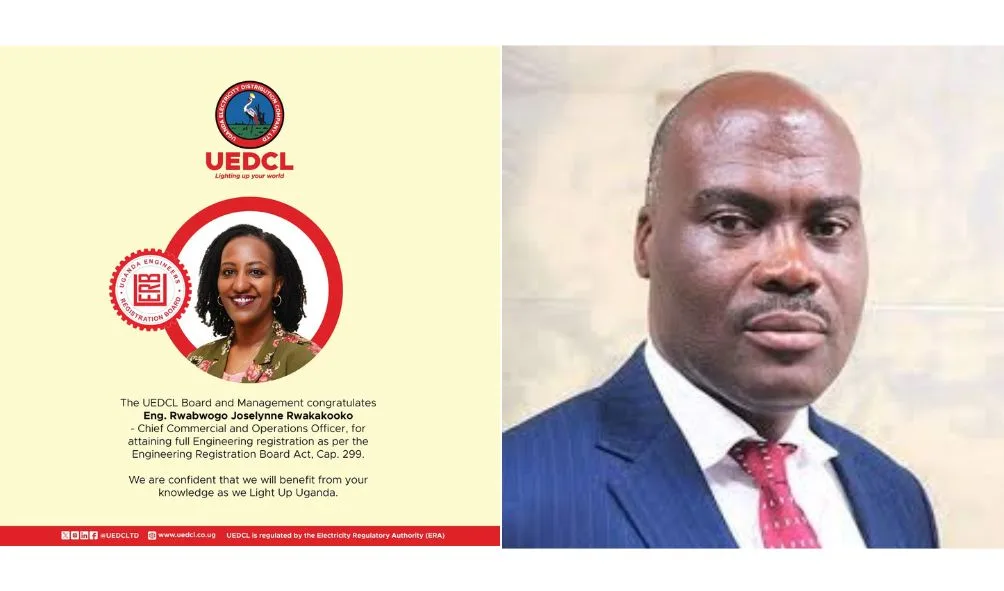
A quiet but consequential shift is unfolding at Uganda Electricity Distribution Company Limited (UEDCL), one that could redefine how electricity reaches millions of Ugandans. At the center of this transformation stands Joselynne Rwabwogo Rwakakooko, newly appointed Acting Managing Director, stepping into the role at a time when the stakes for the country’s power sector have never been higher.
Her appointment, announced by the UEDCL Board on May 2, is more than a routine leadership change. It is part of a broader restructuring effort that signals government’s deepening involvement in electricity distribution, a space historically shaped by private concessionaires such as Umeme Limited. With the expiry of long-standing concession agreements and a renewed push for public sector control, UEDCL is rapidly evolving from an asset-holding entity into a fully operational national utility. For Rwakakooko, the moment is both an opportunity and a test of endurance.
A Technocrat in a Political Transition
With over two decades of experience in electricity distribution, utility management, and commercial operations, Rwakakooko’s ascent has been shaped by steady progression rather than sudden prominence. Her career began in technical and customer-focused roles, eventually positioning her at the intersection of engineering precision and service delivery.
Before joining UEDCL’s top leadership, she built a significant part of her career at Umeme, where she served as Customer Service Engineering Manager and later Head of Network Operations. These roles placed her at the frontline of Uganda’s electricity challenges, from grid reliability to customer dissatisfaction.
Also Read: Uganda’s $4 Billion Oil Refinery Project Will Position Her Energy Independence
Her transition to UEDCL marked a shift toward institutional reform. As Chief Commercial and Operations Officer, she became part of a team tasked with redefining the company’s operational identity. Colleagues credit her with driving performance improvements, strengthening internal systems, and aligning technical operations with commercial outcomes.
Her recent full registration under Uganda’s engineering regulatory framework further solidifies her standing as a professional grounded in both technical expertise and regulatory compliance.
Why This Appointment Matters Now
Rwakakooko’s appointment comes at a critical inflection point for Uganda’s energy sector. For years, public discourse around electricity has been dominated by concerns over high tariffs, inconsistent supply, and perceived inefficiencies in distribution.
The government’s decision to strengthen UEDCL’s role reflects a strategic pivot. By consolidating control within a state-owned entity, policymakers aim to improve accountability, expand access, and ensure that electricity distribution aligns more closely with national development goals. This transition, however, is not without risk.
Taking over expanded distribution responsibilities requires not only technical capacity but also institutional agility. UEDCL must integrate new infrastructure, manage legacy systems, and maintain service continuity during a period of structural change. Any misstep could have immediate consequences for households, businesses, and industrial growth. It is within this context that Rwakakooko steps into leadership.
The Challenges Ahead
Industry observers note that her immediate priorities will likely center on four key areas.
First is stabilizing power distribution during the transition. As UEDCL expands its operational footprint, maintaining consistent electricity supply will be critical in preserving public confidence.
Second is rebuilding trust with consumers. Billing disputes and service complaints have long strained the relationship between utilities and users. Addressing these concerns will require transparent systems and responsive customer engagement.
Third is infrastructure development. Uganda’s growing population and industrial ambitions demand an expanded and modernized grid. This includes extending electricity access to underserved rural communities while upgrading aging urban networks.
Finally, there is the challenge of institutional transformation. Moving from a transitional entity to a fully operational utility demands changes in culture, systems, and performance management.
Continuity and Change
Rwakakooko succeeds Paul Mwesigwa, whose tenure the Board acknowledged with appreciation. While leadership transitions often signal change, the Board has emphasized continuity, assuring stakeholders that UEDCL remains stable and fully operational. The message is clear: while leadership may shift, service delivery must not falter.
Recommended: Climate Launchpad 2026 Opens Doors for African Innovators to Turn Green Ideas into Global Startups
Yet beneath this assurance lies a deeper question about the future of Uganda’s electricity sector. Will increased state control translate into improved efficiency, or will structural challenges persist despite new leadership?
A Defining Moment for the Sector
Uganda’s broader development ambitions hinge significantly on reliable and affordable electricity. From small businesses in urban centers to agricultural enterprises in rural districts, power access is a foundational driver of economic growth.
Rwakakooko’s leadership will therefore extend beyond corporate management. It will influence how effectively electricity supports entrepreneurship, industrialization, and social development.
Her experience in both private and public sector frameworks positions her uniquely for this role. She understands the operational demands of utility management as well as the policy expectations shaping the sector. However, experience alone will not determine success.
The Road Ahead
As Uganda navigates this transition, expectations remain high. Consumers are not merely looking for administrative changes; they are seeking tangible improvements in their daily lives. Fewer outages, fairer billing, and responsive service are the benchmarks by which this new era will be judged.
For Rwakakooko, the task is clear but complex. She must lead UEDCL through a transformation that is as much about systems and infrastructure as it is about public trust.
In many ways, her appointment represents a convergence of timing, expertise, and national need. The spotlight is now firmly on her leadership.
Whether this moment becomes a turning point for Uganda’s electricity sector will depend not only on policy direction but on execution at the highest level. And at the center of that execution is a seasoned engineer stepping into one of the most demanding roles in the country’s public service landscape.
Trusted Stories. Informed Voices. Impactful Reporting.
Website: www.famreports.com
Email: info@famreports.com
Social handle: @FAMMediaGroup