FAMReports News Desk | July 2025
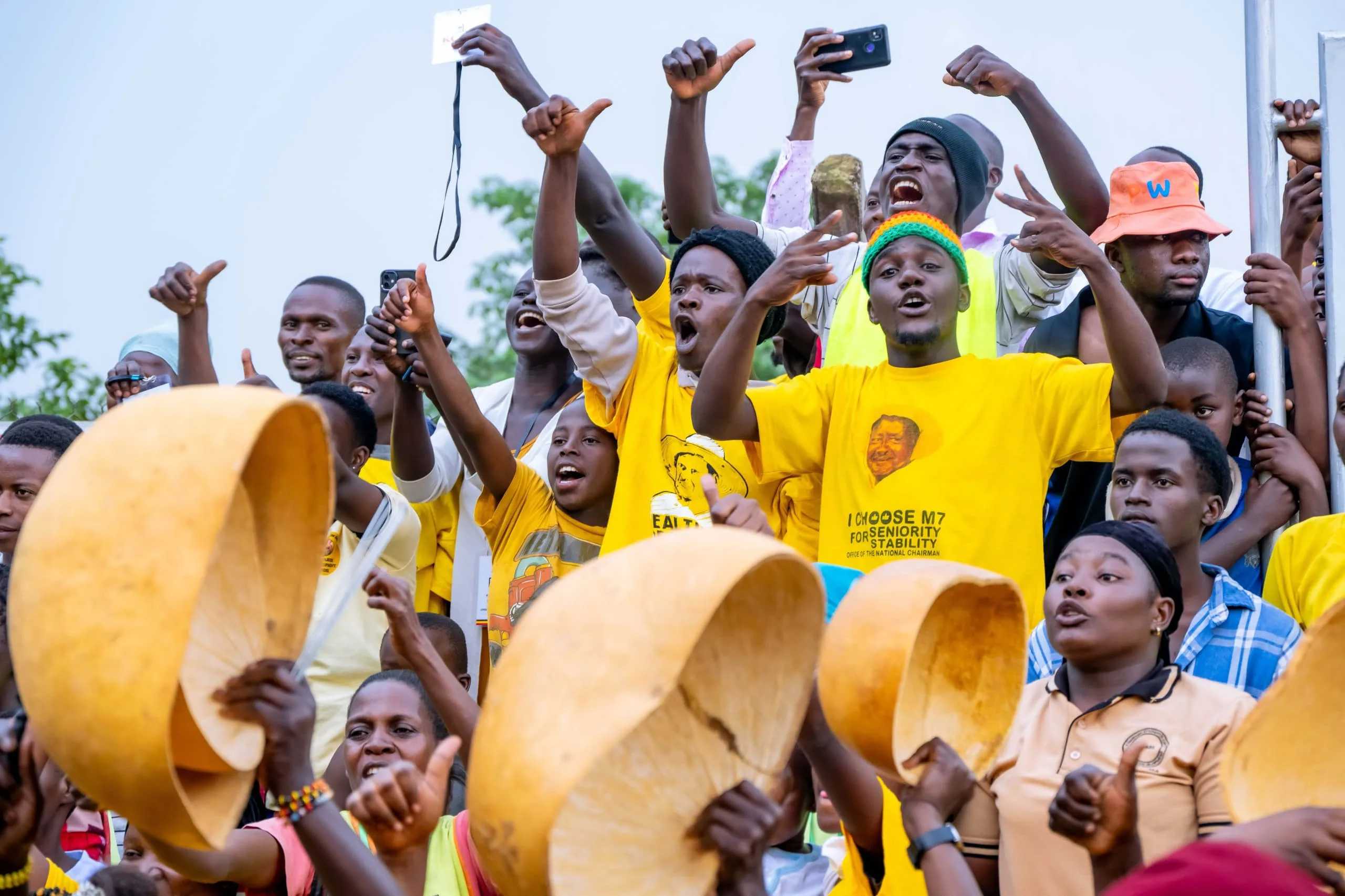
President Yoweri Museveni officially concluded his nationwide assessment of the Parish Development Model (PDM) on Sunday with a rousing call for Ugandans to actively engage in household-level wealth creation. Speaking at a packed rally at Kololo Independence Grounds in Kampala, the President urged citizens to move away from dependency and embrace productivity through enterprise and innovation.
Flanked by First Lady Janet Kataaha Museveni and their daughter Mrs. Natasha Karugire Museveni, the President said that national development efforts such as roads and hospitals would be insufficient if wealth is not generated within homes.
“Let each home enter the money economy. This is our revolution of peace, development, and wealth creation,” Museveni declared.

Launched in February 2022, the Parish Development Model seeks to lift 39 percent of Ugandans currently outside the money economy into income-generating activities. Under the model, each parish receives shs100 million annually to support communities through SACCOs and direct access to capital.
Four Pillars of Household Wealth
The President outlined four key areas Ugandans should focus on to build sustainable household wealth.
Commercial agriculture remains the cornerstone of rural economic transformation. He emphasized “ekibaro” (calculation) in farming — urging farmers to produce with market value and profitability in mind. He cited Joseph Ijaara, a former taxi conductor from Serere who now earns over shs1 billion annually from poultry farming, yoghurt production, and soap manufacturing.
Artisan work was the second avenue. Museveni highlighted success stories in urban areas like Kawempe, Maganjo, and Makindye, where youth are excelling in tailoring, metalwork, carpentry, and welding. He praised the Kigo Carpentry Centre, which now makes high-quality furniture that once had to be imported.
Recommended: Global Youth Challenge Offers 5000 Dollars for Sustainability Projects
The service sector, where wealth is generated from retail and trade even without direct involvement in production, was emphasized as another critical driver of the economy.
Information and Communication Technology (ICT) was identified as a future path, especially for youth. However, the President encouraged prioritizing the first three sectors before venturing into digital business.
Museveni emphasized that wealth, not government payrolls, is the key to job creation. While the government employs around 480,000 people, factories and enterprises have created over 1.2 million jobs. He cited Minister Fred Byamukama, who reportedly earns over shs700 million annually from farming and employs 26 people.
Tackling Urban Development Challenges
Museveni addressed concerns from Kampala residents, particularly those in Kawempe Division, where shs7 billion has been disbursed through PDM over the past three years. However, several locals claimed not to have received the funds. He directed Hajat Madinah Nsereko, Faridah Nambi, and the Kampala Town Clerk to investigate the matter.
The President also announced an increase in urban PDM allocations to shs130 million per parish, with special emphasis on the ghetto youth fund, which will now rise to shs1 billion per division. Beneficiaries such as boda boda riders, garage mechanics, market vendors, car washers, and brick makers are set to receive more targeted support.
Museveni condemned the mismanagement of Emyooga funds in Kampala, promising full investigations and recovery of lost money.
To address urban water access, he proposed introducing prepaid stand taps at shs25 per jerrycan, down from the current shs200, making clean water more affordable for low-income communities.
On education, Museveni decried high tuition fees in government-aided schools. He said it was unacceptable for primary schools to charge shs100,000 to 150,000 and secondary schools up to shs1 million, particularly in ghetto areas. He pledged to work with the Minister of Education and Cabinet to ensure free public education for poor children.
Regarding healthcare, Museveni criticized the conversion of Kiruddu and Kawempe hospitals into referral hospitals. He promised to reverse this and announced new hospitals for Rubaga, Nakawa, and Kampala Central.
Religious and Economic Integration
Responding to concerns from the Muslim community about interest on PDM and Emyooga funds, the President clarified that repayments are not profit-based but intended to sustain the revolving fund. He acknowledged that Imams, who often remain near mosques, may need tailored support models, and pledged to explore alternatives.
Museveni also stressed the need for regional markets, stating that internal demand alone cannot support large-scale production. He called for deeper East African and African continental integration to ensure broader market access.
The President warned against tribal and religious divisions, labeling them a threat to national development. He cited Latin America’s stagnation as a cautionary tale of what happens when disunity prevails despite abundant resources.
Voices of Support
Vice President Jessica Alupo hailed the tours as “inspirational” and credited them with rekindling national unity and highlighting economic transformation.
Minister for Kampala Capital City and Metropolitan Affairs, Hajjat Minsa Kabanda, praised beneficiaries of PDM and Emyooga SACCOs in Kampala and commended the work of technical officers in ensuring successful implementation.
The Kololo event was attended by a host of national leaders, including former Vice President Edward Kiwanuka Ssekandi, Cabinet Ministers, Members of Parliament, and cultural and religious leaders from across Uganda.
Trusted Stories. Informed Voices. Impactful Reporting.
www.famreports.com | info@famreports.com | @FAMMediaGroup