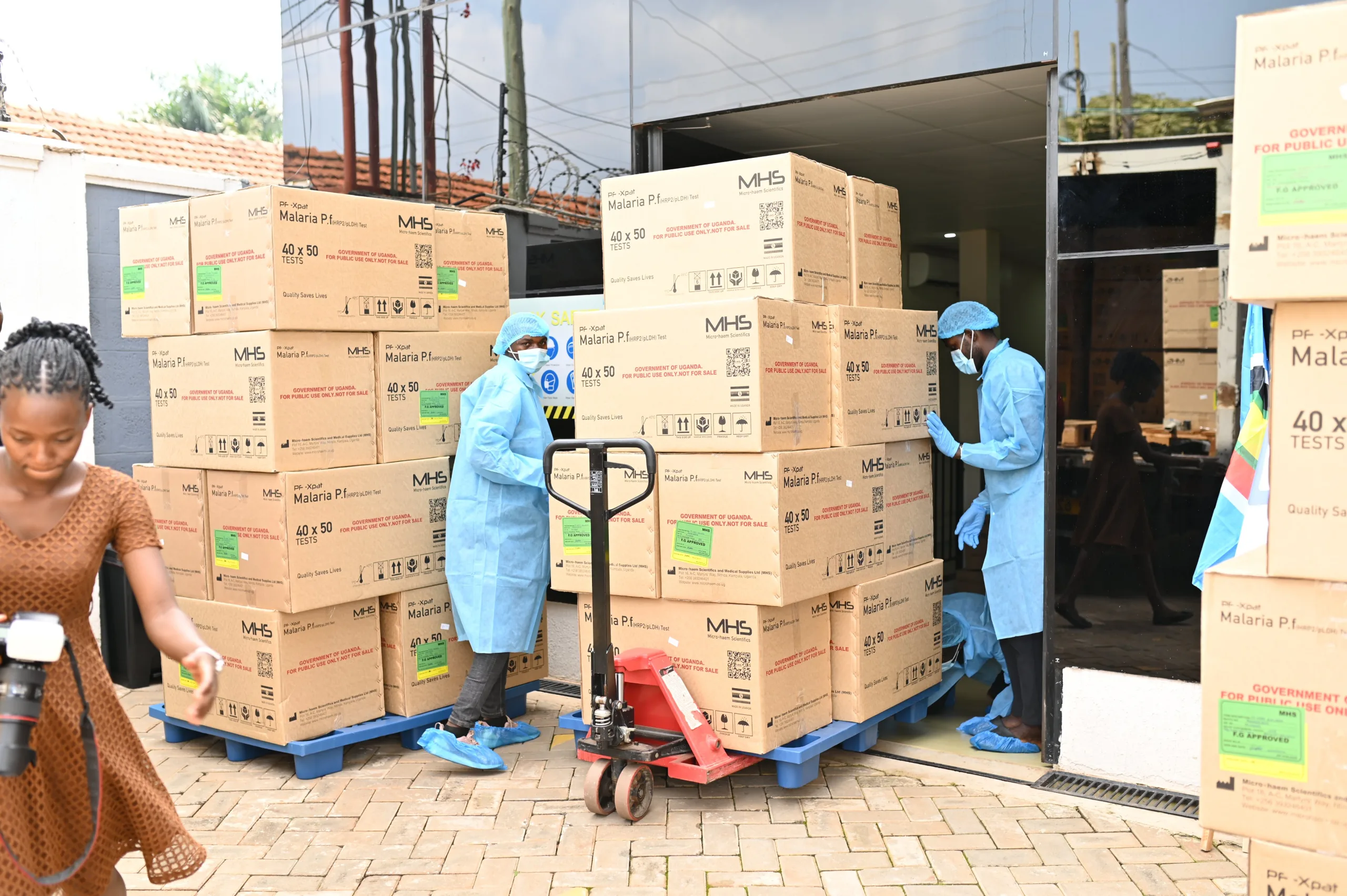
The National Drug Authority (NDA) has approved Uganda’s first locally manufactured malaria test kits, marking a major milestone in the country’s healthcare and pharmaceutical industry.
The approval paves the way for the mass production and distribution of these test kits, which promise faster, more affordable, and accurate disease diagnosis—a critical step toward strengthening Uganda’s healthcare system and reducing dependence on imported medical supplies.
The kits were produced in a joint effort by Uganda Development Bank (UDB), Deseret Microhaem Pharmaceuticals and other partners to boost local pharmaceutical manufacturing, create jobs and drive industrial growth in Uganda.
Through this strategic cooperation, UDB provided funding to facilitate the acquisition of high-tech equipment and raw materials, enabling Deseret Microhaem Pharmaceuticals to produce the kits locally.
The initiative has been hailed as a game-changer in the country’s quest for self-reliance in medical technology. Speaking yesterday during the flag-off ceremony of the kits, UDB Executive Director Patricia Ojangole lauded the breakthrough, emphasizing its role in fostering sustainable growth and driving socio-economic transformation through strategic investments.
“Today, we see the take-off of an agreement that guarantees a sustainable market for the company producing these test kits. This is more than just a product—it symbolizes hope, resilience, and the bright future of Ugandan ingenuity,” Ms. Ojangole stated.

Dr. Daniel Kyabayinze, the Director of Public Health at the Ministry of Health, praised the government’s commitment to building a robust local medical industry.
“Accurate and prompt diagnosis is important. With this kit, a trained specialist examines the sample and gives you a result in just 15 minutes—an accurate one. This is the best gift to Ugandans,” Dr. Kyabayinze remarked.
Also Read: Fully Funded Rotary Peace Fellowship 2026/27 Opens Applications
To ensure quality and reliability, the Ministry of Health, alongside NDA, has committed to post-market surveillance to verify the effectiveness of the kits and ensure the public receives accurate results for better healthcare outcomes.
The government and private sector stakeholders are optimistic that this achievement will open doors for further investment in local pharmaceutical production, ultimately securing Uganda’s place as a regional leader in medical innovation.