Ministry of Agriculture, Animal Industry and Fishers (MAAIF) and Hortifresh, set to conduct interventions in a bid to reduce the interceptions in the Uganda agriculture products export market.
These have begun with training Agronomists on the safe use of agrochemicals and how to reduce interceptions of the Uganda produce at the international export market. The HortFresh Association in collaboration with MAAIF spearheaded the engagement of the agronomists that was held at the of Hortifresh Secretariat Office in Mengo at Balintuma Road, on Thursday, November 23rd, 2023.
MAAIF has set what it called the DCIC/NPPO Interventions that include; partnering with Hortifresh to train agronomists that should also play a big role in helping farmers and exporters of fruits and vegetables increase the knowledge about reducing interceptions in exports.
Kirongo Patrick, the Agriculture Inspector of MAAIF, informed the agronomists during the training that MAAIF is closely working with all the concerned bodies to curb down the interception surgencies.
“As MAAIF we are partnering with Hortifresh to train agronomists and exporters because these are the value chain actors. We are also partnering with Local Government Production Department for farm training and awareness creation on MRLs/SPS issues” said Patrick.
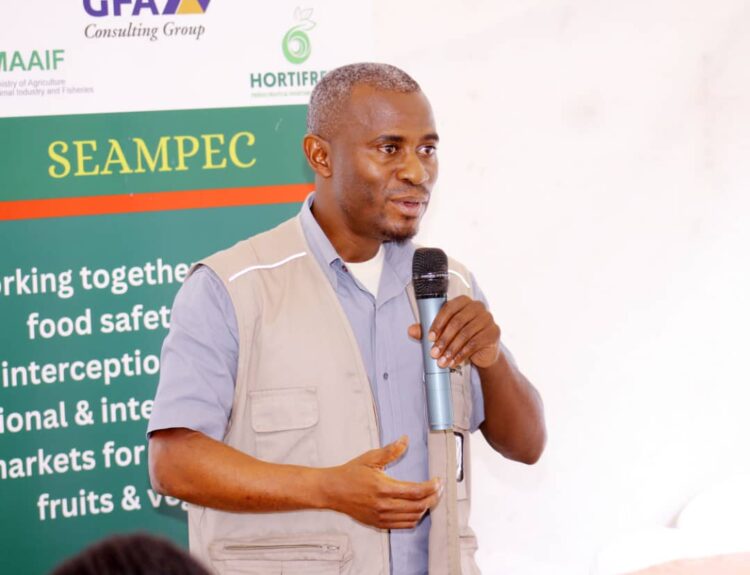
HortiFresh, as the apex body representing growers and exporters of Fresh Fruits and Vegetables (FFV), is collaborating with the Ministry of Agriculture, Animal Industry, and Fisheries and GIZ Uganda to conduct targeted training sessions for agronomists. The primary objective is to impart comprehensive knowledge on good agricultural practices, sanitary and phytosanitary standards. These series of trainings aim to equip key stakeholders in the FFV sector with the necessary skills and understanding to produce, supply, and export FFV produce that adheres to international phytosanitary standards, thereby significantly reducing interceptions.
These agronomists are professional who study and practice the science of soil management and crop production. They also focus on improving agricultural productivity, sustainability, and the overall efficiency of farming practices. MAAIF with Hortifresh intend to have a big team of experts that are set to be recruited in increasing knowledge base and training to enlighten farmers and exporters about the effects and threats of interceptions.
The Ministry of Agriculture, Animal Industry, and Fisheries (MAAIF) in conjunction with the EU have reported a concerning surge in interceptions of Uganda’s Fresh Fruits and Vegetables (FFV) exports. The root causes identified include exporters’ non-compliance with essential export documentation requirements and inadequate application of agrochemicals, leading to heightened levels of interceptions during product testing for Maximum Residue Levels. Consequently, this results in significant financial losses, amounting to millions of dollars in export value. If this trend of increased interceptions persists, Uganda faces the imminent risk of temporary or permanent bans on fruit and vegetable exports to Europe and Asia.
Rationale for the Project Trainings:
According to the Hortifresh Secretariat report, Uganda holds substantial potential to enhance its FFV exports to regional and overseas markets, setting a target of exporting USD 1 Billion by 2030. However, achieving this goal necessitates urgent and unified actions to address the issue of interceptions. Furthermore, ensuring the provision of safe food, both for domestic consumption and international trade, is paramount. The training initiative is imperative to curb the increasing interceptions of Ugandan produce in the European market. Recent statistics from the MAAIF FFV export trends report indicate a staggering rise in interceptions between 2021 and 2022 due to harmful organisms, exceeding maximum residue levels, and errors in documentation.
What you need to know about interception.
Interception in exports refers to the temporary halting or inspection of goods such as fruits and vegetables during the export process. This normally occur for various reasons, including the compliance checks, or quality inspections. Sometimes interceptions occur to ensure adherence to the phytosanitary standards. These interceptions aim to prevent the spread of pests and diseases and ensure that the exported goods meet the importing country’s regulations and standards.
Warming from MAAIF:
Interceptions are on the rise due to pests with a new entrant pest called Thrips which has now been added to the priority pests list of the European Union. So, any exporter intercepted for MRLs will be subject to the emergency measures which include being stopped from exporting the produce in question.
The adverse effects that the interceptions are bring to farmers and all the agriculture exporters
The emerging issues that are causing the Uganda exports a threat to be accepted include a number of threats the Agronomists are warning the country farms and all the agricultural exporters to be vigilant about as they export the products. Kirongo Patrick, the Agriculture of MAAIF informed the Agronomists that these interceptions cause economic problems to the country.
“The interception is not friendly to our economy. It causes Uganda exporters to lose a lot money in the process of destroying the substandard cargo. The whole value chain is affected. The process of interception sometimes causes rejection of the exports.” Said Mr. Kirongo adding that some companies are forced to carry back their cargo from UK once the Standard checks and detectors find Uganda exports not meeting the standards of those import countries.
In availing more information to the exporter to obverse strict surveillance in the safely of their exports, MAAIF informs that the fruits and vegetable importing countries in Europe are becoming so strict on MRLs. The Middle East is also becoming more vigilant on both MRLs and pests of quarantine significance. It is therefore very important for the farmers as the first group in the value chain to be equipped with adequate knowledge in agrochemical management in fruits and vegetable growing.