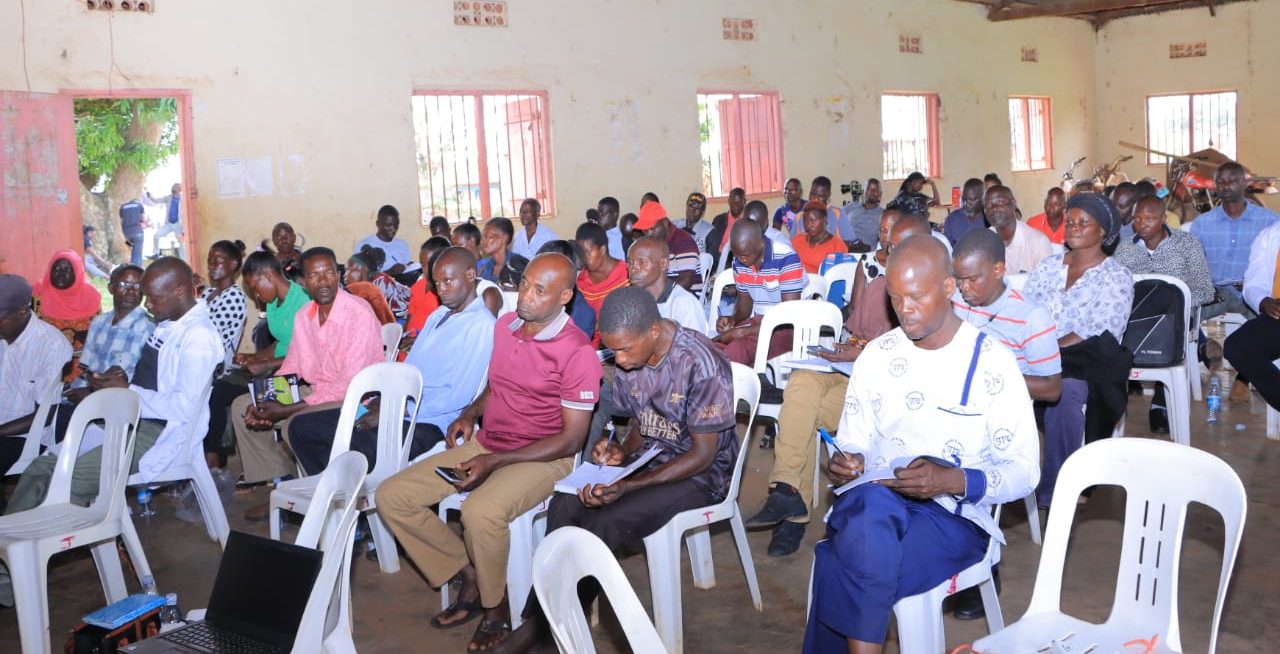
Ministry of Agriculture, Animal Industry and Fisheries and Hortifresh Secretariat have argued farmers to seek recommendable skills and knowledge in applying agrochemicals as new charges have been placed on the poor usage of pesticides.
Ssamula Alexander, from the Department of Crop Inspection and Certification in the Ministry of Agriculture, Animal Industry and Fisheries (MAAIF), while training Luwero Farmers on crop and fruit management, has unearthed the monitoring and evaluation measures to encourage a health food chain.
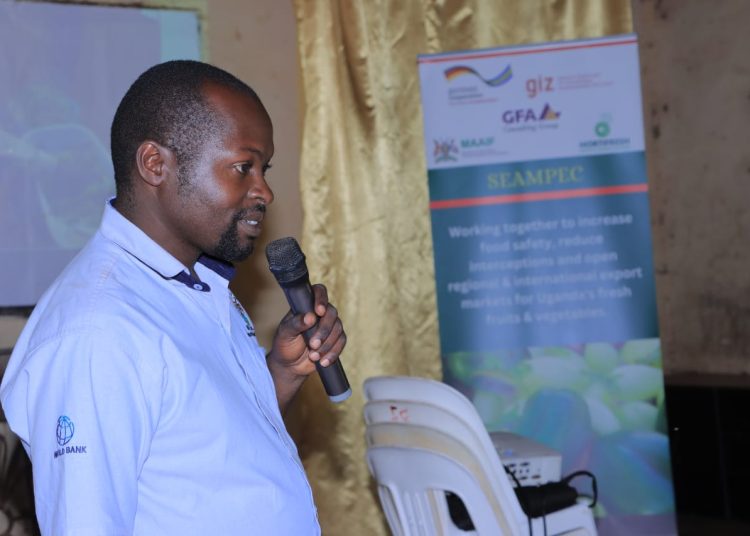
“As MAAIF, in collaboration with Hortifresh our partner, we have come up with monitoring activities and guidelines. These will be conducted by observing the Sanitary and Phytosanitary (SPS) Requirements, agrochemical applications, transportation and exportation from borders to the international market. This time around we will have all the farmers and suppliers in the country accountable of the good and wrong actions involved in the food chain distribution,” Samula informed.
Reasons you may need to know why farmers are being trained across Uganda.
In order to address the interception issue and improve the health of the people, HortiFresh, as the apex body representing growers and exporters of Fresh Fruit and Vegetables (FFV), is collaborating with the Ministry of Agriculture, Animal Industry, and Fisheries and GIZ Uganda to conduct targeted training sessions for farmers, agronomists, export companies and other stakeholders in FFV sector. The primary objective is to impart comprehensive knowledge on good agricultural practices, sanitary and phytosanitary standards. This training aims to equip key stakeholders in the FFV sector with the necessary skills and understanding to produce, supply, and export FFV produce that adheres to international phytosanitary standards, thereby significantly reducing interceptions.
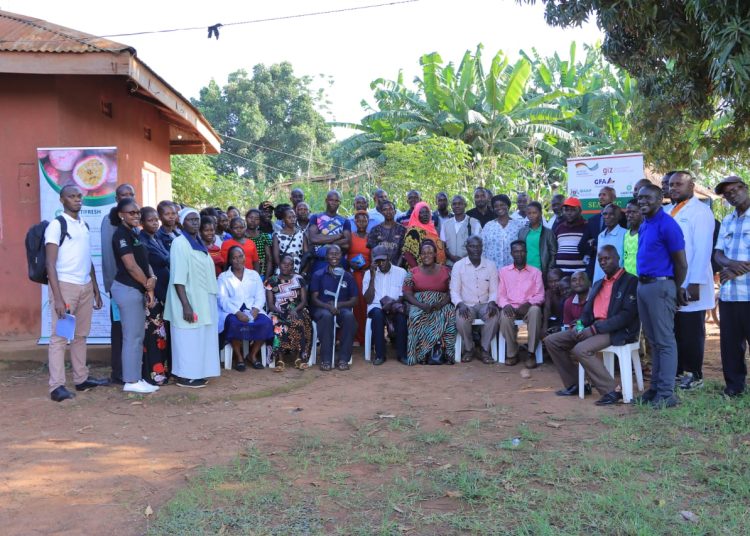
To make the monitoring and evaluation activities easy, farmers are encouraged, by the ministry, to form farmers groups and elect lead farmers. This leadership will be tandem in bridging the gaps between farmers and ministry, as well as the exporters.
The monitoring and evaluation activities are also placed to set farmers’ eyes on the legal frameworks and export guidelines included in the: World Trade Organization, International Plant Protection Convention, and the Uganda Plant Protection and Health Act, 2016. Through these tight legal provisions, farmers are encouraged to follow the Sanitary and Phytosanitary (SPS) requirements. These SPS guidelines includes elements like sanitary measures that accord farmers with responsibilities to keep crop and fruit harvests very clean and ready for market while phytosanitary requires farmers to keep the plant harvests very health for consumption.
With the SPS guidelines in place, MAAIF has warned that any farmer or district that fails to pay heed to recommended legal requirements, the ministry will have no choice left but to ban their supply and hand that particular farmer to the legal bodies.
“When products are poorly handled, the outcomes come back to adversely affect lives of our people including the farmers themselves. So, under this monitoring strategy, we caution farmers to fight poor production. If you fail to follow the guidelines put, we shall ban you from supplying and hand you to the police” Ssamula said. He mentioned that after two months, the elected lead-farmers in every formed group will always have to visit every farm and afterwards submit the recommendations to the Hortifresh Secretariat that will directly involve MAAIF on the checks and avail solutions to the farmers.
However, as the guidelines are being placed, farmers still have many queries on the formed interventions that include the gap that is existing and the awareness raising that is still a question. In Luwero in particular, farmers revealed that the lead farmers, who also act as the chairpersons of the groups are very harsh on the new entrants. The farmers also requested MAAIF and Hortifresh Secretariat to give them opportunity to meet the exporters directly and discuss the food chain distribution and market processes.
According to MAAIF plans on interceptions intervention measures, monitoring exercise is set to begin in January 14th, 2024, with the forwarding of farmers formed group to Hortifresh Secretariat that will make it easy for the Ministry to tract, monitor and evaluate the farming activities.
Why the training of farmers targeted districts like Luwero?
Statistics from MAAIF and Hortifresh Secretariat inform that Luwero has been one of the leading suppliers of the intercepted agriculture exports. And yet it is still the leading supplier of Fresh Fruits and Vegetables for exports and internal markets.
Mukisa Joseph, the Coordinator of SEAMPEC an intervention project under Hortifresh Secretariat said, “The reason for targeting farmers’ trainings starting with Luwero is because it is the main source of Fresh Fruit and Vegetables which are taken to the European Union. This is where most of the exporters come and source the export the products from.” He added that the reason that cause interceptions are now fought from Luwero district as they also extend trainings to other districts across the country.
What you need to know about SEAMPEC Project.
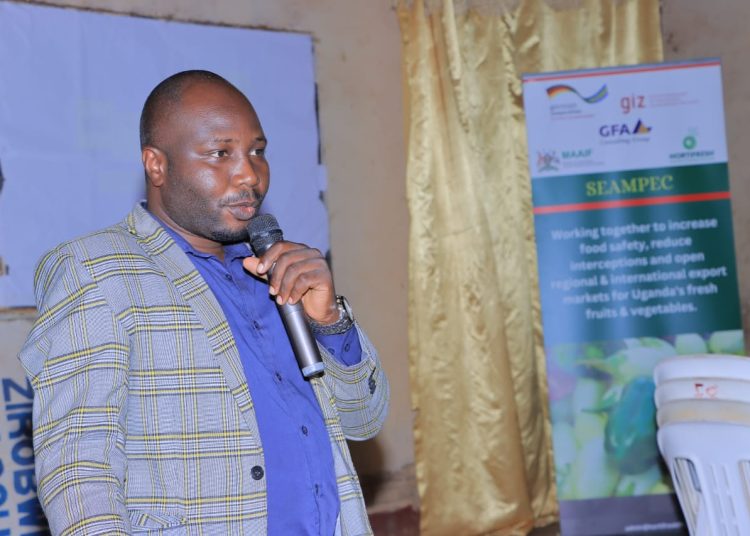
This an agreed upon intervention project by GIZ Uganda, the East Africa Community and also in partnership with GFA Consulting Group. It is a project aiming at reducing interceptions and improving the food quality that is consumed within Uganda and exported outside the country.
In extending more intentions to reduce poor quality of agriculture products, MAAIF has set more other legal requirements that will be streamlined in the 2024. These include putting in place the Memorandum of Understanding (MoUs) and Code of Conduct of the farmers will be put in the pipeline. The ministry also informs that the penalties on abusing the code of conduct is to ban a farmer from supplying products.
Cautions to farmers from the Agronomist on application of pesticides.
During the farmers training, Dr. Otut Alex, the Senior Agricultural Inspector of Agrochemical Division in MAAIF, warned farmers to first get acquainted with the right precautions, that is the PH (The level of Alkalinity and Acidity) of agrochemicals and landscape measurement before they apply the pesticides.
He said, “When you use a single agrochemical product, the pest will get used to it and this makes it resistant to death by the pesticide. So, you need to alternate on the mode of action and PH time of the chemical product you are applying. For instance, there are chemicals(pesticides) like cypermethrin that make the plant to take 40 days before it is harvested. You can’t use cypermethrin today and harvest the plant tomorrow.”
Alex also encouraged farmers to first know their market before they apply chemicals in order to avoid spraying harvests with wrong chemicals. This is likely to affect the market of that particular harvest.
He added that pesticide application is a very important issue in securing the lives of people and he encouraged the farmers to avoid buying expired and wrong pesticides. He cautioned farmers, mostly those without any knowledge about pesticide, to always consult specialists in agrochemicals before they are to apply any pesticides on their farms.
It has been revealed by many agronomists involved in the SEAMPEC Intervention Project that once farmers are well informed about the application of agrochemicals, good health and welfare of the people in Uganda, at regional levels and international level will be uplifted. Besides the raising interceptions of Uganda’s exports will reduce greatly.
Hortifresh Secretariat justifies that Uganda holds substantial potential to enhance its Fresh Fruit and Vegetable (FFV) exports to regional and overseas markets, setting a target of exporting USD 1 Billion by 2030. However, achieving this goal necessitates urgent and unified actions to address the issue of interceptions.
Furthermore, ensuring the provision of safe food, both for domestic consumption and international trade, is paramount. The training of farmers initiative is imperative to curb the increasing interceptions of Ugandan produce in the European market. Recent statistics from the MAAIF FFV export trends report indicate a staggering rise in interceptions between 2021 and 2022 due to harmful organisms, exceeding maximum residue levels, and errors in documentation.