FAMReports News Desk | January 2026
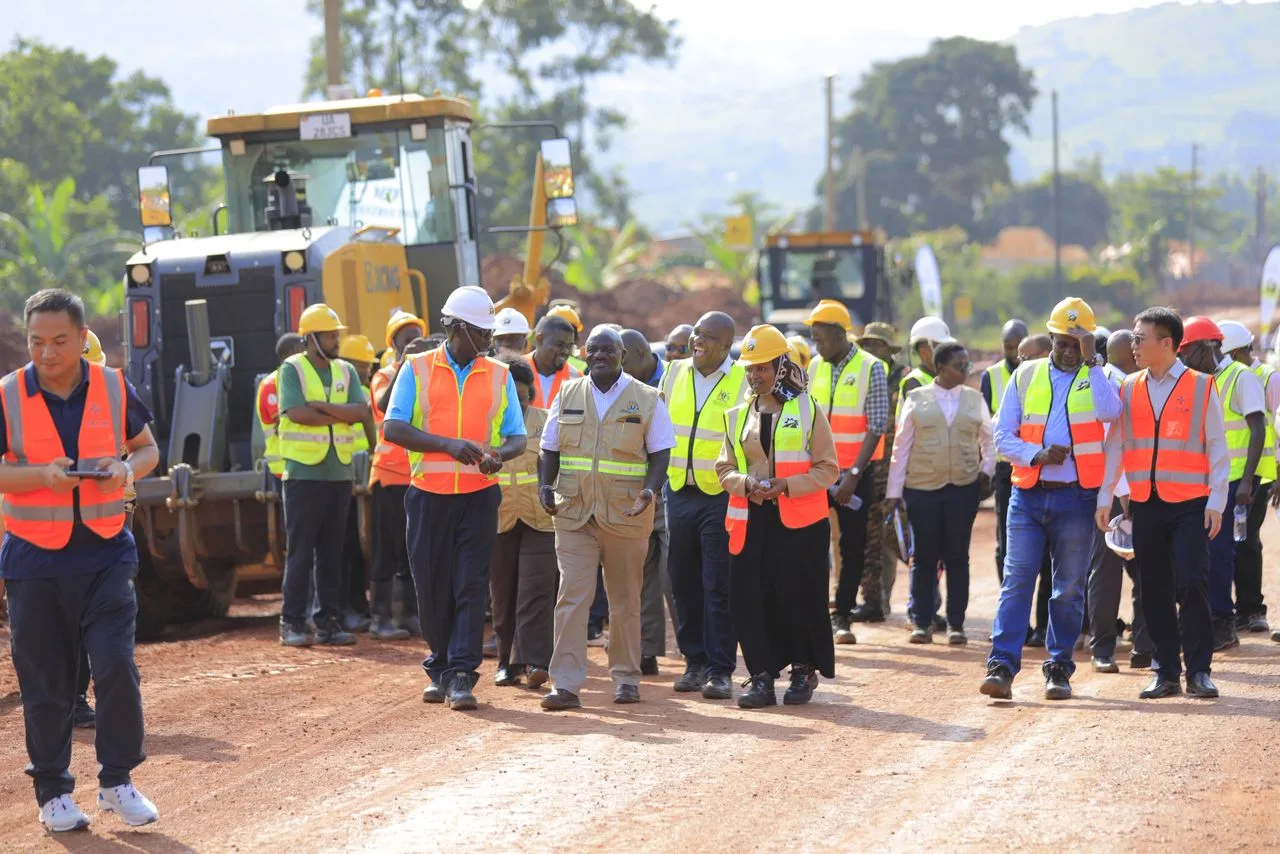
The Minister of Works and Transport, Gen Katumba Wamala, has concluded a two day inspection tour of major road reconstruction and upgrade projects across Uganda’s Central Region, reinforcing government’s commitment to infrastructure development as a catalyst for economic growth and national transformation.
Accompanied by senior officials from the Ministry of Works and Transport and project engineers, the inspection aimed to assess progress, identify bottlenecks, and hold contractors accountable for delivery timelines on road projects considered vital to Uganda’s Vision 2040 development agenda.
Vision 2040 seeks to transform Uganda from a developing economy into a modern and prosperous middle income country, with transport infrastructure identified as a critical enabler for trade, mobility, industrialization, and regional integration.
Also Read: Janet Museveni Commissions UVTAB Facility in Push to Curb Youth Unemployment
The inspection began with the 6.7 kilometre Kawuku Bwerenga road, currently under gravel standard and part of the national roads network. The road serves as a key connector within Wakiso District and surrounding communities, supporting movement of people, agricultural produce, and commercial goods.
According to officials, the project has faced delays largely due to challenges in acquiring the right of way. The road is now expected to be completed by the end of May 2026.
Gen Katumba Wamala stressed the importance of resolving land related disputes early, noting that delays in compensation continue to slow progress on otherwise well funded projects.
From Kawuku Bwerenga, the minister proceeded to inspect the Najjanankumbi Busabala road, an 11 kilometre corridor slated for upgrade to paved standards. The project also includes rehabilitation of the Namasole road link and signalization of the busy Namasole and Salama road junctions, which are critical traffic nodes in Kampala’s metropolitan area.
The Najjanankumbi Busabala road is expected to significantly improve connectivity between Kampala and surrounding suburbs while easing congestion on major highways leading to Entebbe and the Lake Victoria basin.
On the first day, the minister further inspected a cluster of interconnected road projects including Kisubi Nakawuka spanning 27 kilometres, Nakawuka Kasanje at 22 kilometres, Nakawuka Mawagulu at 11 kilometres, Kasanje Buwaya covering 9 kilometres, and the Entebbe Nakiwogo road stretching 35 kilometres.
These roads form part of a broader strategy to decongest major highways, improve access to Entebbe International Airport, and support tourism, trade, and real estate development in Wakiso District and surrounding areas.
On the second day, Gen Katumba Wamala inspected the Mityana Mubende road, an 86 kilometre corridor linking Mityana, Kassanda, and Mubende districts. The road is a critical economic artery supporting agriculture, mining, and trade in western and central Uganda.
Recommended: 10 Lessons Singapore Can Teach Africa Economies About Economic Discipline
During the inspections, the minister urged contractors to adhere strictly to project timelines, emphasizing that delayed completion undermines economic productivity and increases costs to government and taxpayers.
He reiterated that improved road infrastructure plays a central role in easing pressure on major highways, lowering transport costs, improving road safety, and enabling faster movement of goods and services across the country.
Gen Katumba Wamala also openly acknowledged land acquisition as one of the biggest challenges affecting road construction nationwide.
“As a country, land acquisition is an impediment in the construction of these road projects,” he said. “The cost of land compensation in some cases is higher than the actual construction cost of the road.”
The minister called for stronger collaboration between government agencies, local leaders, and affected communities to resolve land matters amicably and in a timely manner.
From a governance perspective, the inspection tour reflects a renewed emphasis on supervision, accountability, and value for money in public infrastructure projects. Analysts note that regular field inspections by senior leadership help minimize project delays, cost overruns, and quality concerns.
As Uganda continues to invest heavily in transport infrastructure, the successful completion of these Central Region road projects is expected to unlock economic opportunities, support urban expansion, and strengthen Uganda’s competitiveness as it advances toward middle income status.
Trusted Stories. Informed Voices. Impactful Reporting.
Website: www.famreports.com
Email: info@famreports.com
Social handle: @FAMMediaGroup