
FAMReports News Desk | February 2026
Uganda’s vocational and technical education sector is undergoing a deliberate and measurable transformation, shaped by policy reforms, institutional strengthening, and growing public confidence in skills based qualifications. What was once perceived as a marginal alternative to academic education is increasingly being repositioned as a strategic response to labour market needs, industrialisation goals and self employment pathways.
At the centre of this transition is the Uganda Vocational and Technical Assessment Board (UVTAB) operating under the Ministry of Education and Sports. UVTAB’s mandate to standardise, assess and certify employable skills has become a cornerstone of national efforts to address youth unemployment, underemployment and persistent skills mismatch across sectors.
According to the Ministry of Education and Sports, Technical and Vocational Education and Training has been elevated to play a central role in Uganda’s human capital development strategy. Government policy statements have consistently framed TVET as a practical bridge between education and productivity, particularly in an economy where formal wage employment remains limited.
The Minister of Education and Sports, Hon. Janet Kataaha Museveni, has repeatedly underscored the importance of vocational and technical education in public addresses. The ministry has outlined three guiding priorities for reform: ensuring training relevance to market demand, strengthening quality assurance through credible assessment, and aligning skills development with national development plans.
Also Read: Five Skills Young Professionals Can Master to Boost Income in 2026
A key institutional milestone was the commissioning of the UVTAB National Skills Assessment Centre at Kyambogo. The facility was presented by the government as a practical investment to support reforms by centralising assessment operations, examiner training and digital records management. The centre replaces dispersed rented offices and improves the board’s capacity to handle rising candidate numbers.
During the commissioning, Hon. Janet Museveni reaffirmed the government commitment to expanding access to vocational training and certification. She noted that skills training can only deliver impact if it is accessible, affordable and properly assessed, adding that the government is exploring further subsidies to widen participation.
These reforms have been formalised through the TVET Act 2025, which consolidated assessment functions under UVTAB and strengthened the legal framework for competence based certification. The Act introduced uniform standards across public, private and informal training providers, addressing long standing fragmentation in skills assessment and recognition.
Expansion of assessment infrastructure has gone hand in hand with increased outreach. In January 2026, the eight storey National Skills Assessment Centre became operational, enabling UVTAB to manage examiner coordination, digital systems and stakeholder engagement more efficiently.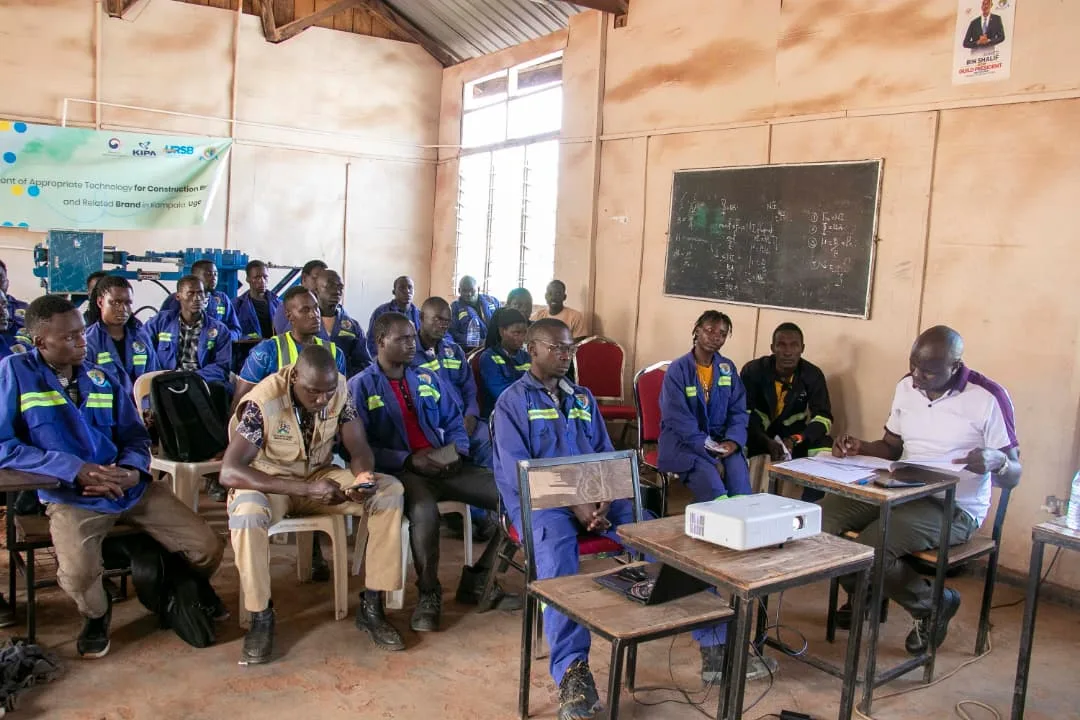

Speaking during assessment outreach activities and media engagements in 2025, UVTAB Principal for Communication and Public Relations Kambaho Narasi Anyijuka highlighted emerging trends from assessment data.
“What we are seeing is that skills training is translating into real employment and self employment opportunities,” he said while addressing communities in the Tooro and Rwenzori sub regions. “More than 80 percent of candidates assessed are able to engage in productive work within a year of certification.”
He also pointed to steadily rising assessment numbers as evidence of growing confidence in vocational certification among learners, parents and employers.
Recommended: $5,000 Seed Capital Available Under Tony Elumelu Foundation WE4A Initiative
UVTAB records indicate that over 137,000 candidates registered for TVET assessments in 2025, the highest figure since the board’s establishment. Data released in 2024 showed that more than 90 percent of candidates demonstrated job ready competence across trades including electrical installation, plumbing, welding, agriculture, building construction, garment design and computer studies.
Government aided skills development centres and community polytechnics now operate across all regions, including Apac, Oyam, Tororo, Kabale, Mbale, Wakiso, Amuria and Omoro. Programmes targeting Primary Leaving Examination certificate holders have widened access to certification for early school leavers.
The Ministry has also directed UVTAB to strengthen collaboration with industry and production hubs. Employers increasingly rely on UVTAB certification as evidence of competence, a shift influencing recruitment practices in construction, manufacturing, agribusiness and services.
While challenges remain in equipment, instructor availability and assessment funding, Uganda’s TVET reforms represent a structural policy shift rather than a short term intervention. As implementation continues, assessment data and employment outcomes will remain central to evaluating whether vocational education delivers on its promise.
Trusted Stories. Informed Voices. Impactful Reporting.
Website: www.famreports.com
Email: info@famreports.com
Social handle: @FAMMediaGroup