FAMReports News Desk | September 2026
CARE Uganda and its partners are establishing the Uganda Green Deal Hub, a collaborative platform intended to build a pipeline of credible, climate focused and investment ready enterprises and connect them to appropriate sources of capital.
The initiative brings together organisations with complementary expertise to support Ugandan enterprises working on climate and green economy solutions, with a particular focus on helping businesses become ready for investment and access financing.
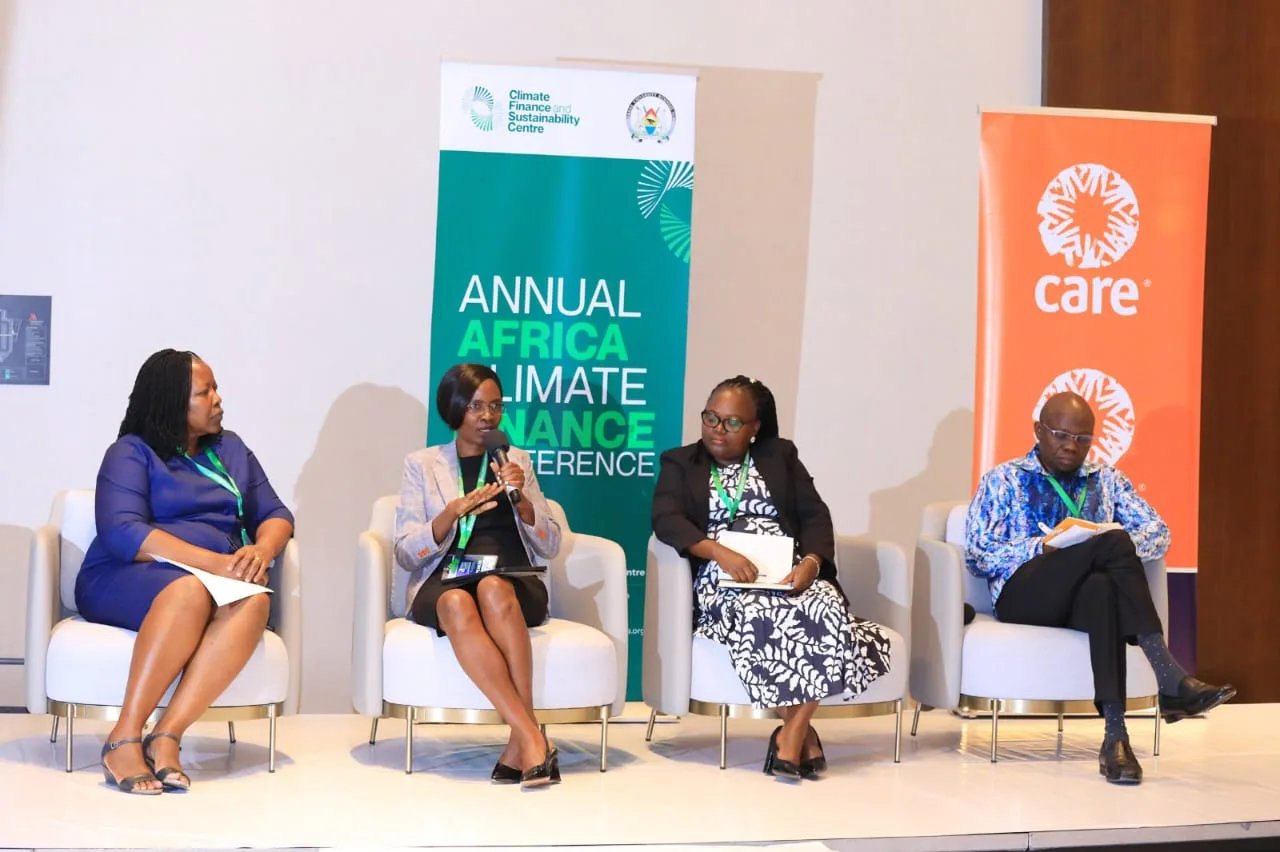
The announcement was made by Esther Nampijja, Head of Human Resources at CARE Uganda, on behalf of the Country Director, during the Green Finance Matchmaking Partnership Hub side event held as part of the annual Africa Climate Finance Conference at the Kampala Marriott Hotel.
The conference focused on the theme “Commitments to Capital: Operationalization of Africa’s Climate Finance Architecture,” examining how climate finance commitments and pledges can be translated into bankable investments, practical policies and social and green innovations.
WHAT YOU NEED TO KNOW
– CARE Uganda and partners are establishing the Uganda Green Deal Hub.
– The initiative will support climate focused and investment ready enterprises.
– Partners include Capital Solutions Uganda and the Climate Finance and Sustainability Centre, among others.
– The Hub is intended to build a pipeline of credible enterprises and connect them with appropriate capital.
– Support will extend beyond financing to include investment advisory, enterprise development and market connections.
– The initiative will incorporate research, evidence and mechanisms for reducing and sharing investment risks.
– CARE Uganda will contribute its experience in enterprise origination, last mile community reach and a gender focused approach.
– The initiative comes amid growing efforts to close Africa’s climate finance gap.
New platform targets Uganda’s green investment gap
The proposed Uganda Green Deal Hub is designed to address a challenge facing many climate focused enterprises: having viable ideas and solutions but lacking the capacity and structures required to attract investment.
Nampijja said the initiative is not intended to create another organisation attempting to provide every service independently.
Also Read: The Enduring Legacy of James Mulwana: From Hustle to Industrial Giant
Instead, she described it as a collective effort involving partners with different capabilities that can be brought together to strengthen businesses at different stages of their development.
“This is why Uganda Green Deal Hub is being formed. It’s not another organization trying to do everything but a collective of partners bringing together complementary capabilities to deliberately build a pipeline of credible, climate focused and investment ready enterprises and connect them to the right forms of capital with the strength each carries,” Nampijja said.
The approach is expected to help enterprises move from promising climate solutions to commercially viable ventures capable of attracting investors and accessing different forms of financing.
Investment readiness goes beyond access to capital
According to CARE Uganda, enterprises seeking climate finance require more than simply being introduced to potential investors.
Nampijja said businesses need financing advisory services, enterprise development support, market connections and assistance with investment restructuring.
They may also require access to different forms of capital depending on their stage of development and business model.
“Investment ready enterprises also need financing advisory, enterprise development, market connections, investment restructuring, access to different forms of capital, research and evidence and in many cases, mechanisms that can help reduce and share risks,” she said.
The proposed Hub will therefore bring together different forms of expertise to help enterprises address the technical, financial and commercial requirements associated with investment.
CARE brings community and gender focus
CARE Uganda is expected to contribute its experience working directly with communities, entrepreneurs and vulnerable groups.
Nampijja said CARE’s role will include enterprise origination, last mile reach and a gender lens.
The gender dimension is significant because women and young people often face barriers to accessing finance, markets, business networks and investment opportunities.
By incorporating a gender focused approach, the initiative could help ensure that climate finance reaches enterprises and communities that have traditionally been underserved by conventional financial systems.
Climate finance takes centre stage
The announcement came during discussions focused on Africa’s climate finance architecture and the challenge of converting financial commitments into actual investments.
Africa faces significant financing needs to address climate change, build resilience and support a transition towards greener economies.
Yet many enterprises working on climate solutions continue to struggle to access suitable financing.
The Green Finance Matchmaking Partnership Hub side event brought together policymakers, financial experts, development actors and other stakeholders to explore ways of connecting climate focused businesses with appropriate sources of capital.
The discussions also considered youth led climate solutions and blended finance opportunities across different sectors.
Conference brings together climate finance stakeholders
The Africa Climate Finance Conference was organised by the Climate Finance and Sustainability Centre in collaboration with Africa Research Impact, the Frankfurt School of Finance and Management and the Institute of Banking and Financial Services.
The event provided a platform for discussions around financing gaps, investment opportunities, policy interventions and mechanisms for increasing climate finance flows.
United Nations agencies, including the Food and Agriculture Organization, were among the stakeholders involved in discussions addressing climate finance and development challenges.
The participation of government, financial institutions, development organisations and private sector actors highlighted the growing importance of collaboration in mobilising capital for climate related investments.
Green enterprises need stronger financing ecosystems
Climate focused businesses often operate at the intersection of environmental sustainability and commercial activity.
These can include enterprises working in renewable energy, sustainable agriculture, climate smart technologies, waste management, water solutions, green manufacturing and other areas that contribute to climate resilience or emissions reduction.
However, developing such enterprises requires an ecosystem that combines technical expertise, finance, market access and business development.
The proposed Uganda Green Deal Hub seeks to create such an ecosystem by connecting organisations with different strengths rather than duplicating their individual roles.
CARE’s wider climate resilience work
CARE Uganda’s work in the country includes emergency assistance, climate resilience, livelihoods and improving access to food and water.
Over time, its programmes have increasingly incorporated longer term approaches aimed at strengthening community resilience and locally led development.
The organisation works particularly with communities affected by conflict, climate shocks and displacement, including areas hosting large refugee populations.
Women and young people have been among the groups targeted through programmes supporting entrepreneurship, access to finance and market opportunities.
This experience provides a foundation for CARE’s proposed contribution to the Green Deal Hub.
From climate commitments to investment
A central issue raised during the conference was the need to move beyond climate finance pledges towards actual investments that generate measurable economic and environmental impact.
For Uganda, this means developing enterprises that can demonstrate both climate impact and commercial viability.
Investment ready businesses can potentially attract financing from commercial investors, development finance institutions, impact investors, blended finance facilities and other sources of capital.
However, businesses often require preparation before they can effectively engage these financiers.
This is where the proposed Hub could play a significant role by helping enterprises strengthen their business models, financial structures, investment proposals and market strategies.
FAMReports will continue to follow developments around the establishment of the Hub, including participating partners, supported enterprises, financing opportunities and its contribution to Uganda’s green economy.
FAM MEDIA GROUP
FAMReports | FAM Skills Academy | FAM Publications | FAM Studio | FAM Business Consultancy
Trusted Stories. Informed Voices. Impactful Reporting.
Email: info@famreports.com
Website: www.famreports.com
Social Handles: @FAMMediaGroup
For news, opportunities, business, development and public interest stories, follow FAMReports.
© 2026 FAM MEDIA GROUP. All rights reserved.