FAMReports News Desk | August 2025
A growing chorus of voices is rising among traders across the East African Community, calling for harmonized trade policies to unlock the vast potential of trade in agroecological produce.
These traders say that aligning standards, improving infrastructure, and strengthening farmer support systems will not only reduce post-harvest losses but also ensure fair incomes for smallholder producers.
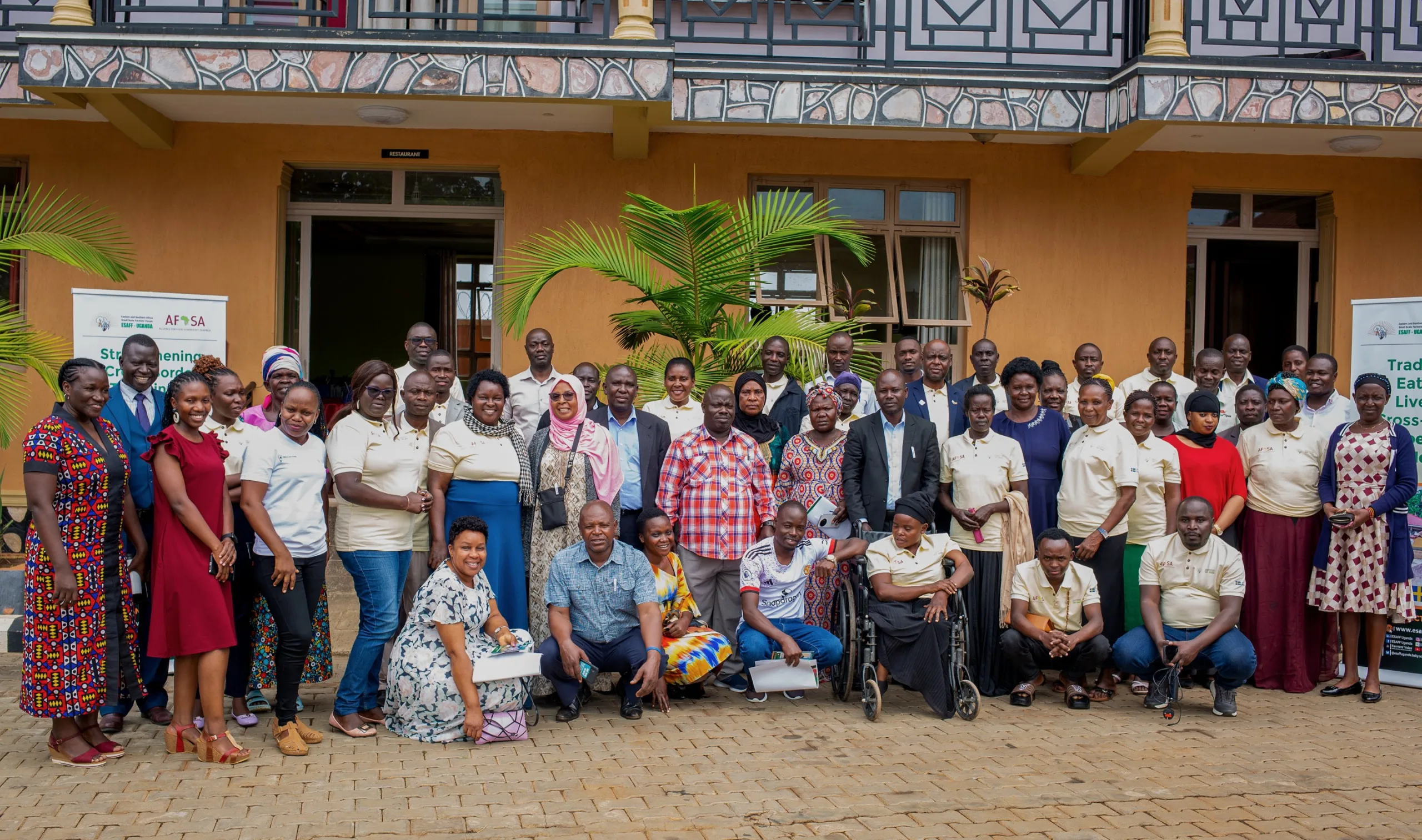
This was during the National Multi-Stakeholder Meeting on Intra-EAC Trade in Agroecological Produce, convened by Eastern and Southern Africa Small Scale Farmers Forum (ESAFF Uganda) in partnership with Alliance for Food Sovereignty in Africa (AFSA) in Bugiri District. The dialogue brought together farmers, traders, policymakers, private sector representatives, and development partners to deliberate on how to unlock inclusive, sustainable trade in agroecological products and services within the EAC region.
The meeting follows the validation of a recent study by AFSA on intra-EAC agroecological trade, conducted at four key border points: Busia (Uganda-Kenya), Mpondwe (Uganda-DRC), Namanga-Tarakea (Kenya-Tanzania), and Rusumo (Rwanda-Tanzania). The study revealed that trade in agroecological produce is already vibrant but hampered by systemic challenges.
ALSO READ: Uganda Airlines Unveils New Board to Spearhead Growth and Route Expansion
At Busia, maize and beans dominated trade with 146.9 metric tons and 92.6 metric tons sold respectively, followed by groundnuts (34.6 tons), sorghum (35 tons), and cassava (17.3 tons). In Mpondwe, rice emerged as the most traded commodity with a staggering 100,000.3 metric tons, while beans, tomatoes, onions, and cabbages also featured prominently. Across all sites, cereals, legumes, bananas, vegetables, and medicinal plants stood out as products of high demand.
Despite these promising figures, the study noted that bottlenecks continue to erode trade gains. Household-level post-harvest losses in Uganda alone are estimated at UGX 900,000 (USD 240) per household annually, translating into over UGX 500 billion (USD 130 million) in national losses. Barriers such as unharmonized standards, high transport costs, multiple taxation, certification hurdles, and inadequate border infrastructure further restrict agroecological trade, limiting the ability of smallholder farmers and traders to benefit from growing regional and global markets.
Field visit to Busia markets highlights real challenges
On August 19, 2025, ahead of the Bugiri dialogue, delegates conducted a field visit to Busia border markets on both the Ugandan and Kenyan sides. The visit offered participants an opportunity to directly engage with traders, farmers, and border officials while observing trade-related infrastructure.
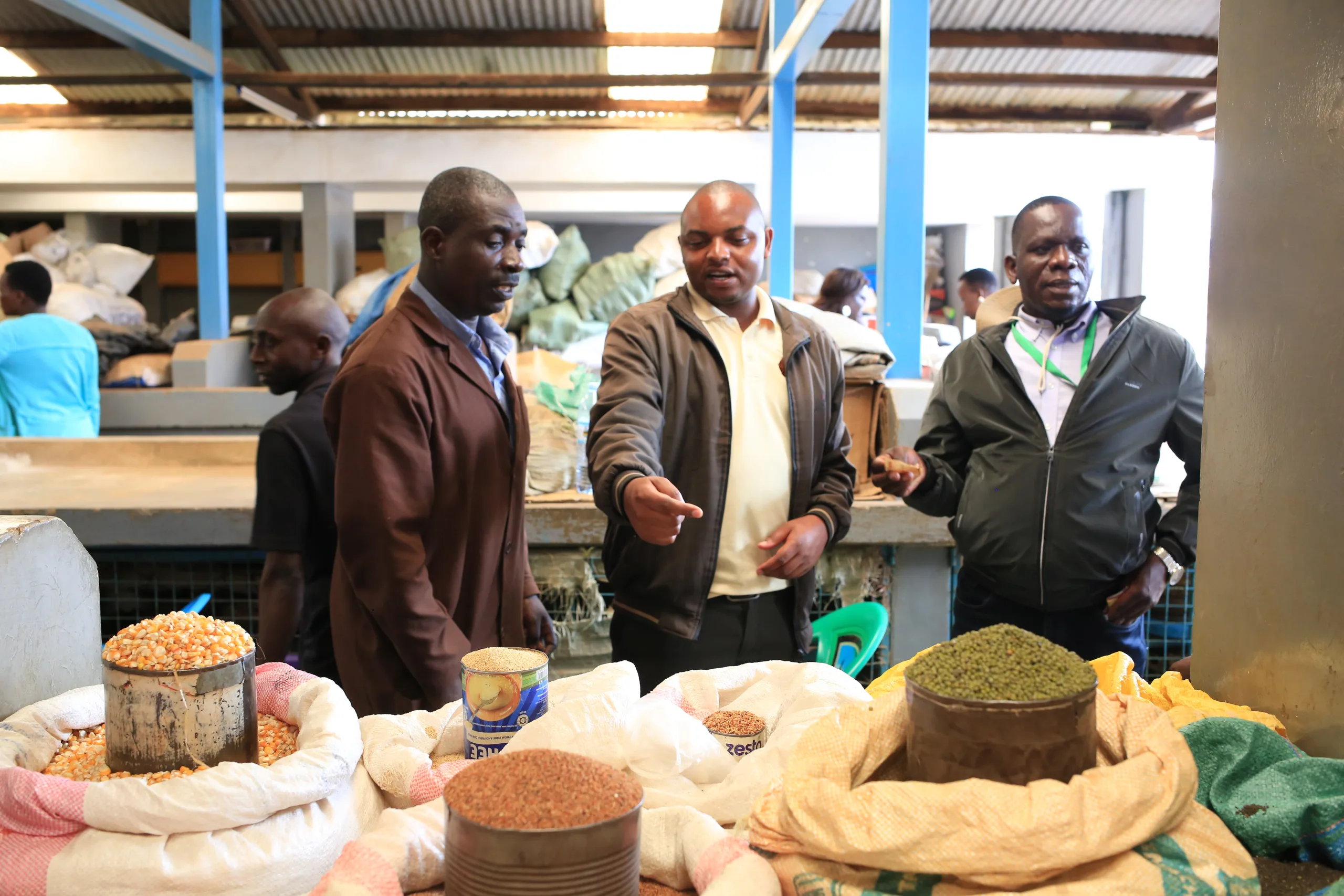
Traders voiced concerns over multiple taxation, fluctuating prices, transport bottlenecks, and poor post-harvest handling practices. Many decried the lack of information on agroecological produce and relevant trade policies. For instance, some traders were unaware of the Simplified Trade Regime (STR) designed by the EAC to ease small-scale cross-border trade, while others pointed out that its enforcement remains inconsistent.
During the dialogue, Sir Bob Sunday George, Agroecology Focal Person at the Ministry of Agriculture, Animal Industry and Fisheries (MAAIF), emphasized that unless the sector is formalized and regulated, adulterated products will continue to undermine market confidence.
“We need to mainstream and regulate farmers and traders in order to cleanse the system of adulterated products. Farmers and traders should get certified, because once you are certified, you are already addressing the market issue. Let us embrace Participatory Guarantee Systems (PGS) to increase the number of farmers accessing organic certification, alongside agroecological zoning. We also need specific markets dedicated to agroecology and organic products,” he noted.
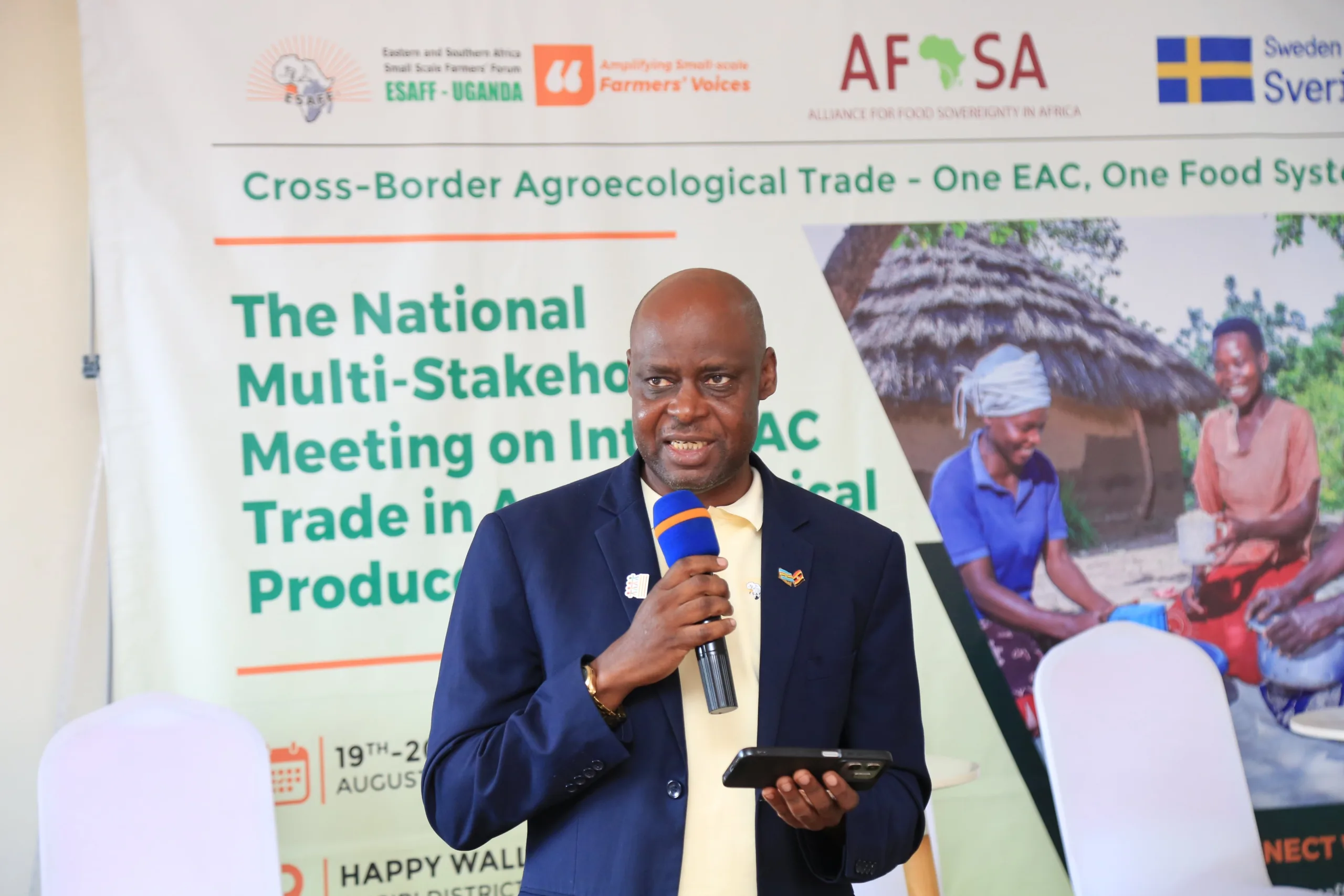
Hakim Baliraine, Chairperson Board of Directors at ESAFF Uganda, stressed that food safety and farmer incomes are inseparable.
“Post-harvest handling is central to food security and fair trade. Regional governments, through ministries such as the Ministry of Agriculture and the Ministry of East African Community Affairs, should work with us to sensitize small-scale farmers, traders, and producers on the need to improve sanitation across the agricultural value chain.”
He added that to address the challenge of standards, traders and consumers must distinguish between commodities that are certified and those that are not, as well as between those produced conventionally and those that are not. He urged the Ministry of East African Community Affairs to provide clarity on what is produced conventionally, what is organic, what is certified, and what is uncertified to address the challenge of standars.
In her remarks, ESAFF Uganda’s National Coordinator, Ms. Nancy Mugimba, noted that while they already have been supporting farmers to improve packaging and add value to their produce, more needs to be done.
“The handling of these products is poor and their methods are rudimentary. In our next strategy, we are going to find a way of supporting farmers to add value to their products and package them in a better way so that they fetch a better price. This we are already doing, but we need more stakeholders to come on board.”
Africa Kizza, lead consultant at AFSA, called upon government to consider creating a distinct identity for agroecological produce to enhance market visibility.
“We are proposing the creation of an agroecological label—not just a mark, but a label. Just as organic products have a recognizable green label, agroecological products should also have a distinct identity. Organic is different from agroecological, and so we are engaging government on the need to establish a label that clearly shows a product is agroecological.”
Traders demand practical solutions
Cross-border traders used the platform to push for immediate reforms. Zira Babu, the youth representative of Busia Women Cross-Border Cooperative, highlighted the importance of accessible policy information.
“We must bridge the information gap, especially regarding the existing policies intended to ease and simplify cross-border trade. Strengthening collaborations and partnerships between different stakeholders is key, and we must advocate for the harmonization of policies practically, not just theoretically.”
On his part, Alex Nakajjo, the trade advisor at Africa Continental Free Trade Area AfCFTA echoed calls to scale up production and embrace digital innovations.
“The global demand for agroecological products is increasing. Let’s widen the scope and position ourselves to produce more agroecological products to feed these markets, and also embrace digital marketing.”
If realized, these reforms advocated for at the dialogue, could significantly reduce post-harvest losses, increase farmer incomes, and create new opportunities for women and youth in production, value addition, and cross-border trade.
Trusted Stories. Informed Voices. Impactful Reporting.
 www.famreports.com |
 info@famreports.com
 @FAMMediaGroup