Sixteen promising innovators from seven African countries have been shortlisted for the 2025 Africa Prize for Engineering Innovation, awarded by the Royal Academy of Engineering. With a record 30 countries applying, this year’s competition highlights Africa’s growing influence in engineering and technology.
Established in 2014, the Africa Prize is the continent’s largest award for engineering innovation, providing funding, mentorship, and business training to help entrepreneurs scale their solutions. The 2025 finalists are tackling critical challenges in healthcare, education, agriculture, and sustainability, introducing revolutionary products such as AI-powered sign language tools, electricity-free cold storage, waste-to-furniture solutions, and biodegradable plates.
The finalists will be announced in September, followed by a grand finale in October in Senegal, where the winner will be awarded £25,000. Three runners-up will each receive £10,000, and the ‘One-to-Watch’ award, chosen by the audience, will grant £5,000 to the most impactful pitch.
Shortlisted innovations and entrepreneurs Engineering Solutions For Africa’s Challenges
- Aquamet, developed by Frank Owusu in Ghana, is a device that monitors the quality of water in local fisheries sending real time notifications to the farmers’ mobile phone to ensure higher yields.
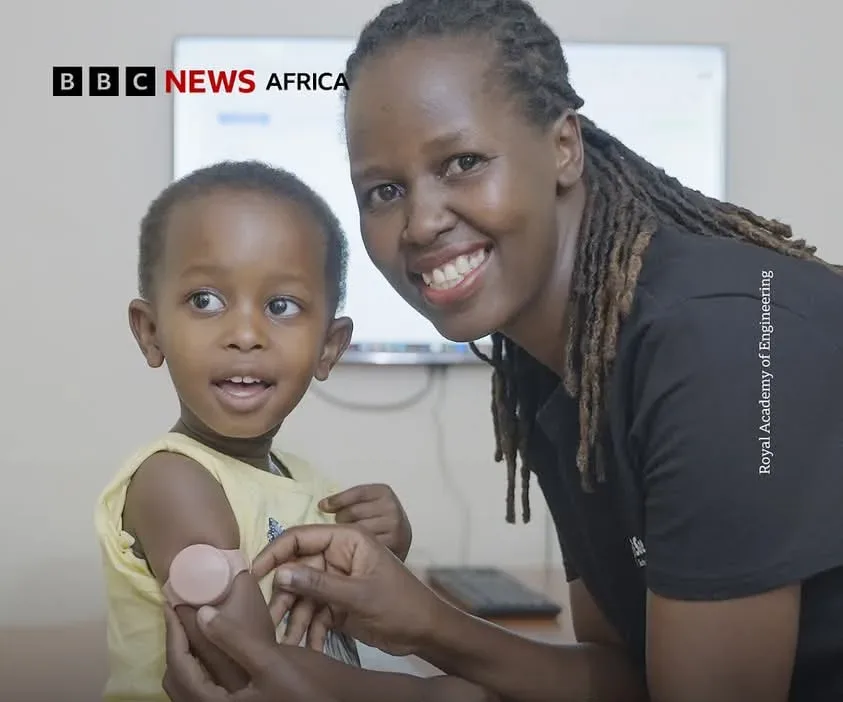
- Autothermo, designed and created by Nura Izath in Uganda, is an innovative bracelet-like device worn by newborns that monitors and transmits real time data to carers such as temperature, fever and respiratory issues through an intuitive emoji system.
- Community Kitchens Powered by Renewable Energy created by founder Peter Njeri in Kenya, are clean cooking community kitchens that use a new, alternative clean cooking gas made from plastic waste.
- E-Safiri, founded by Carol Ofafa in Kenya, is championing the adoption of electric mobility by expanding charging stations and battery swapping points nationwide, harnessing both renewable and grid energy.
- Eco Plastic Wood, is a solution by Edgar Edmund Tarimo in Tanzania, converting discarded plastic waste into high quality lumber and furniture.
- Eco-Plates, created by Rui Bauhofer in Mozambique, are disposable plates made from recycled maize husks that are fully bio-degradable and infused with seeds that will germinate and grow once discarded.
- FarmBot is the brainchild of Sam Kodo in Togo – an autonomous robot that can monitor crop health and plant growth whilst detecting any pests and gathering soil data, all shared with farmers in real time.
- FreshPack, created by Editha Mshiu in Tanzania, is a cold storage solution that was inspired by human skin and is made from phase change materials, ensuring that produce can be stored and kept fresh for longer without the need for electricity.
- Hybrid Solar Dryers, designed by James Nyamai in Kenya, are agricultural dryers powered by biofuels as well as solar for all weather conditions to reduce losses during the rainy season.
- Mkanda Salama, created by medical student Paschal Kija in Tanzania, is a massaging device designed to be worn around the abdomen to manage post-partum haemorrhaging and reduce maternal death rates.
- Neo Nest, designed by Vivian Arinaitwe in Uganda, is a neonatal warming and monitoring device that relays key health indicators of a newborn in real time to medical professionals to prevent neonatal deaths.
- Play and Learn Web App, developed by Chinelo Okafor in Nigeria, is an AI powered device that enhances digital skills and develops individual pathways for each user to improve digital training.
- Smart Hive Device and Precision Pollination Technology, by Margaret Wanjiku from Kenya is an AI powered device that monitors key features within a beehive to combat bee colony collapse and boost crop yields.
- Smart Luku is a smart meter designed by Shabo Andrew in Tanzania, that allows individual tenants to measure and pay for their own electricity within a shared residence, with the option to share their electricity with other tenants.
- A Sustainable Agro-Tech Solution, by Ahmed Maruf from Nigeria, is an upscaling solution for scrap metal transformed into affordable agricultural and industrial machinery.
- TERP 360, created by Elly Savatia from Kenya, is an AI powered device that translates words into sign language in real time through an app offering greater inclusivity for deaf people.
Also Read: $100M and Counting: Tony Elumelu Foundation’s Decade of Impact in African Entrepreneurship
Scaling Innovation for Global Impact
The Africa Prize for Engineering Innovation has played a vital role in accelerating the growth of African-led solutions, helping innovators refine their business models and connect with investors. Past winners have expanded their businesses across Africa and beyond, creating jobs and improving lives.
This year’s finalists demonstrate Africa’s rising influence in technological advancement, solving local problems with global potential. As the competition moves toward the final stage, the spotlight is on these innovators who are redefining Africa’s engineering landscape.
Stay tuned for the official announcement in September and the grand finale in October.